What Happens If You’re Trapped in a Building Collapse?
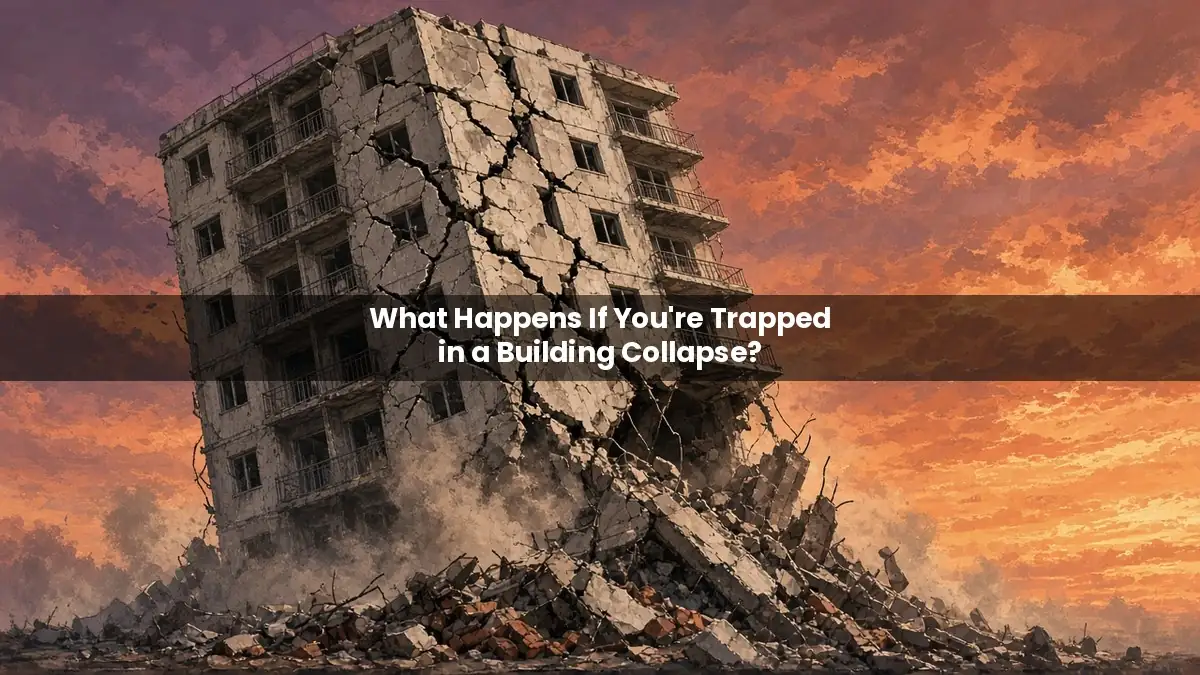
What happens if you’re trapped in a building collapse? New Yorkers watched that question play out live on Wednesday. A three-story building in Flatbush, Brooklyn, fell into a construction pit next door, and at least eight people died. Firefighters dug through brick and wood through the night and into Thursday. This explainer covers what happens to the body under rubble, how rescuers find people and what you can do to raise your odds.
Short answer: If you’re trapped in a building collapse, the biggest early dangers are crush injuries, dust and limited air. Rescue crews arrive fast in most cities, and they use cameras, listening devices, dogs and drones to find survivors. Your job is to protect your airway, avoid kicking up dust, save your energy and make noise in smart ways: text if you can, tap on a pipe or wall and use a whistle instead of shouting.
We separate confirmed news, established rescue science and safety guidance below. The Brooklyn story is still developing, so details may change.
What happened in the Brooklyn building collapse?
Status: developing story (updated November 12, 2026). Officials say the numbers may still change.
- When and where: just after 4 p.m. Wednesday, near Flatbush and Bedford avenues in Brooklyn, according to the FDNY.
- The building: a three-story structure with a store on the ground floor and apartments above.
- What gave way: the building at 1321 Flatbush Avenue collapsed into a neighboring lot at 2625 Bedford Avenue, where workers had been excavating for a new building earlier that day, Buildings Commissioner Ahmed Tigani said, according to Gothamist.
- Deaths: at least eight people died, including two children and two construction workers, Mayor Zohran Mamdani said Thursday. Six died at the scene and two at hospitals, AP and Gothamist report. On Wednesday night, the first official count was two dead.
- Injuries: at least 18 people were hurt, including four firefighters and at least seven children. Reported counts of critical patients have varied. The FDNY listed four as critical on Thursday morning, while the mayor said Thursday afternoon that one person remained in critical condition and most others were stable.
- The response: more than 250 firefighters and EMS workers responded, FDNY Commissioner Lillian Bonsignore said, along with FDNY and NYPD dog teams and drones, NBC New York reports.
- The investigation: the Department of Buildings and law enforcement are investigating both the collapsed building and the construction site, with the Brooklyn District Attorney’s Office involved. The city also began inspecting about 100 other sites linked to five companies tied to the project, amNewYork reports.
What’s still unknown: officials have not determined the cause. Commissioner Tigani said investigators need more access to the site before they can reach a conclusion. As of Thursday afternoon, crews were still searching the rubble, and officials had not said whether anyone else is missing. Until officials release findings, any claim about who or what was at fault is speculation.
What happens in the first seconds of a collapse?
Status: general rescue knowledge.
Collapses happen fast. Floors and walls can drop in seconds, and loose material shifts as it settles. Pockets of space, which rescuers call voids, often form near sturdy furniture, stairwells, interior walls or piles of debris. People who survive inside a collapse are often found in these voids.
At the same time, a thick cloud of dust fills the air. That dust can irritate the eyes, choke the throat and make breathing hard. As a result, covering your nose and mouth is one of the first things safety agencies advise.
What happens to your body when you’re trapped in a building collapse?
Status: established medical science.
Three main threats build over time.
- Crush injuries: heavy debris pressing on a limb or the torso can damage muscle. When that muscle breaks down, it can release potassium and a protein called myoglobin into the blood. Doctors call the dangerous result crush syndrome, a form of rhabdomyolysis that can trigger kidney failure and deadly heart rhythms.
- Breathing problems: dust, smoke or a heavy weight on the chest can make it hard to get enough air. Low oxygen affects the brain quickly, as we explain in what happens when the brain runs out of oxygen.
- Dehydration and cold: the longer someone waits, the more water loss, blood loss and body temperature matter.
Crush syndrome also explains why rescues are delicate. Releasing pressure suddenly can send those built-up substances into the bloodstream all at once. For that reason, paramedics often try to start fluids and monitoring before or during extrication.
How do rescuers find people under rubble?
Status: established practice.
Local fire departments lead the first response. In Brooklyn, crews used pickaxes, power saws, buckets, vacuum trucks, drones and search dogs, according to AP and ABC7 New York.
For bigger disasters, the US has a national backup. FEMA says its system has 28 Urban Search and Rescue task forces. Each full team has 70 members, including structural engineers, physicians and canine search teams. They can deploy within six hours and split into two 35-member teams for round-the-clock work.
Rescuers also shore up damaged sections with timber and other supports. This step, called cribbing or shoring, keeps the pile from shifting onto survivors or crews.
What should you do if you’re trapped?
Status: official safety guidance.
The US government’s Ready.gov earthquake guidance offers simple steps that apply to any collapse:
- Send a text if your phone works. Ready.gov notes that texts may be more reliable than calls and can save battery power.
- Bang on a pipe or wall so rescuers can hear you.
- Cover your mouth with your shirt or other cloth to filter dust.
- Use a whistle instead of shouting. Yelling makes you inhale more dust and wears you out.
Beyond that, common-sense rules help. Stay as still as you can, so you don’t shift debris or raise more dust. Don’t light a match or lighter, because gas lines may be broken. Finally, try to stay calm and pace your tapping, so you can keep signaling for hours.
Why do buildings near construction sites collapse?
Status: background context, not the Brooklyn cause.
Officials haven’t said why the Flatbush building fell. In general, however, digging next to an older building can weaken the soil that supports its foundation. That’s why cities require protections such as underpinning, shoring and monitoring when crews excavate beside existing structures. Investigators will likely look at what work was underway and whether the right protections were in place.
Structural failures can also follow earthquakes, storms and fires. For a look at the most extreme version, see what would happen if an earthquake reached an impossible intensity.
Myths to ignore
- “Stand in a doorway.” Outdated. During an earthquake, Ready.gov says to Drop, Cover and Hold On and to avoid doorways.
- “Shout as loud as you can.” Risky. A whistle or tapping carries well and saves your air and energy.
- “Once the dust settles, it’s safe.” False. Damaged buildings can shift again. Ready.gov advises against entering them.
Frequently asked questions
How long can a person survive trapped in a building collapse?
It varies widely. Air, injuries, water and temperature all matter. That’s why rescuers search as quickly as possible and keep going for days after large disasters.
What is crush syndrome?
It is a dangerous condition that can follow prolonged pressure on muscles. Damaged muscle releases substances that can harm the kidneys and heart, especially when the pressure is lifted.
Should you try to dig yourself out?
Only if you can move safely without shifting debris above you. Otherwise, stay still, signal and wait for trained rescuers.
What caused the Brooklyn collapse?
Officials haven’t said. As of Thursday, November 12, the cause had not been determined. The Department of Buildings and law enforcement are investigating both the collapsed building and the excavation next door.
For more survival science, explore our what would happen if scenarios hub and our guide to what happens if the power grid fails for a month.