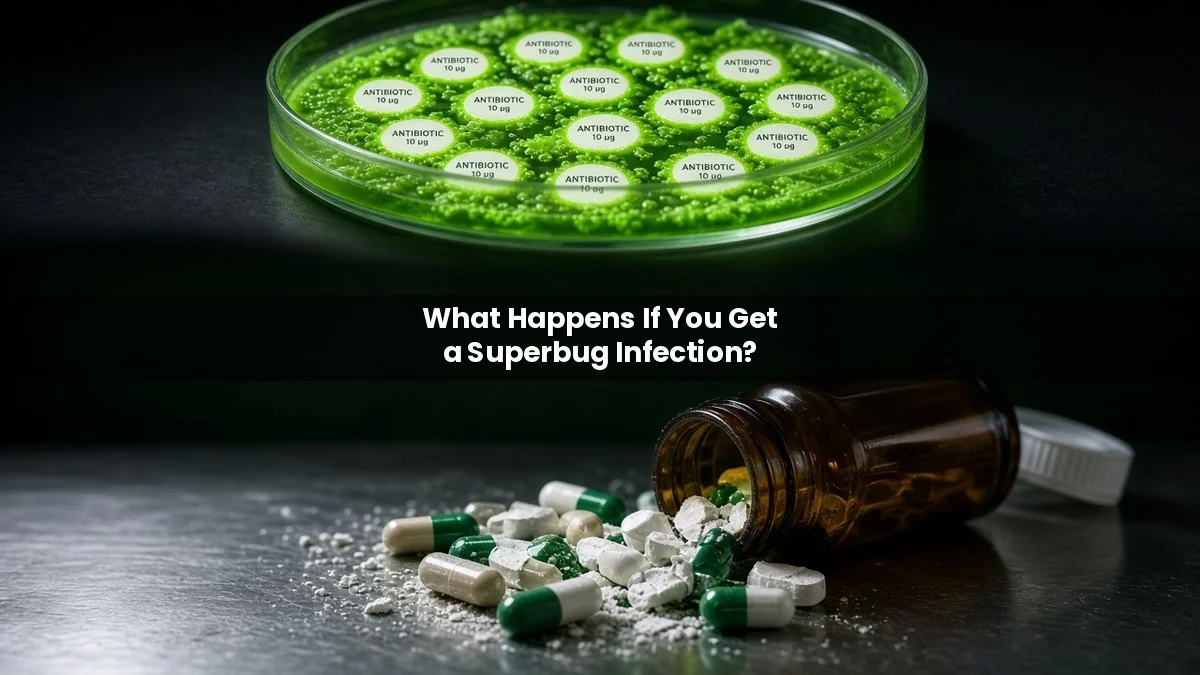
What Happens If You Get a Superbug Infection? CDC’s New Warning
A small cut gets red and swollen. Your doctor prescribes antibiotics, but a week later, nothing has changed. A lab test then shows that the bacteria have learned to survive the drugs. This is the reality of a superbug infection, and it is more common than most people think. In October 2026, the CDC released its biggest report yet on drug-resistant germs. So what happens if you get a superbug, and what happens if antibiotics stop working altogether?
Short answer: if you get a superbug infection, your first antibiotic may fail, and doctors need lab tests to find a drug that still works, so treatment gets harder and recovery takes longer. Most people still recover, but the risks rise. The CDC says drug-resistant germs cause more than 9.3 million infections a year in the US.
Key Takeaways
- Drug-resistant germs cause more than 9.3 million US infections a year, the CDC says.
- Including C. diff, the toll reaches 9.7 million infections and 50,800 deaths.
- The CDC lists 19 threats, including four urgent ones such as C. auris.
- Most superbug infections remain treatable, but treatment is harder and slower.
- Using antibiotics wisely is the best way to keep them working.
What Is a Superbug?
A superbug is a bacterium or fungus that resists one or more of the drugs designed to kill it. Doctors call this antimicrobial resistance (AMR). According to the CDC, resistant infections can be difficult, and sometimes impossible, to treat.
Resistance develops naturally. However, every time we use antibiotics, the germs that survive can multiply and pass on their defenses. Overuse and misuse of antibiotics in people and animals speed up the process.
What the New CDC Superbug Report Found
The CDC’s 2026 Antimicrobial Resistance Threats Report is its most comprehensive estimate to date. Based on 2023 data, it found:
- More than 9.3 million drug-resistant infections in the US each year.
- More than 39,000 deaths each year from those infections.
- 9.7 million infections and 50,800 deaths when C. diff, a related threat, is included.
- 19 threats, ranked as urgent, serious or concerning, plus a watch list of six more.
Globally, the CDC says AMR kills more than one million people each year and was associated with nearly 5 million deaths in 2019.
The four “urgent” superbugs
The CDC lists four pathogens that need urgent, aggressive action, according to its threats list:
- Candida auris (C. auris): A fungus that spreads in health care facilities. Infections reached 4,523 in 2023, nearly 10 times higher than in 2019, AAP News reported.
- Carbapenem-resistant Acinetobacter: Often causes pneumonia and wound infections in hospital patients.
- Carbapenem-resistant Enterobacterales (CRE): These resist carbapenems, which are often last-resort antibiotics.
- Drug-resistant gonorrhea: A sexually transmitted infection that is getting harder to cure.
Familiar names also appear on the “serious” list, including MRSA, drug-resistant tuberculosis and drug-resistant Salmonella.
What Happens If You Get a Superbug Infection?
Most people never notice the difference at first. A superbug infection usually looks just like a normal one. Here is what typically happens next.
1. The first treatment fails
Symptoms such as fever, pain or swelling do not improve, or they get worse. This is often the first sign of resistance.
2. Doctors run lab tests
A lab grows the germ from a sample, such as blood, urine or a wound swab. It then tests which drugs still work. This step can take a few days.
3. Treatment becomes harder
Doctors may switch to stronger or older antibiotics. Some must go through an IV, and some carry more side effects, such as kidney damage. As a result, patients may need longer hospital stays.
4. Most patients recover, but not all
Many superbug infections remain treatable. However, they carry a higher risk of complications, sepsis and death, especially for older adults and people with weak immune systems. We explain those warning signs, and why every hour of treatment matters, in what happens if an infection turns into sepsis.
What Happens If Antibiotics Stop Working Completely?
Experts sometimes call this the “post-antibiotic era.” It would reshape modern medicine. For example:
- Routine surgery becomes risky. Hip replacements, C-sections and appendix removals rely on antibiotics to prevent infection.
- Cancer care gets more dangerous. Chemotherapy weakens immunity, so patients depend on antibiotics.
- Organ transplants face new limits. Patients take drugs that suppress the immune system.
- Common infections turn deadly again. A urinary tract infection or strep throat could become serious.
Fortunately, we are not there yet. Still, the WHO calls AMR one of the top global public health threats.
Who Is Most at Risk?
- People in hospitals or long-term care facilities.
- People with catheters, ventilators or surgical wounds.
- Older adults and people with chronic illness.
- People who have taken many courses of antibiotics.
Even so, healthy people can catch some superbugs, such as MRSA or drug-resistant gonorrhea, in the community.
How to Protect Yourself From Superbugs
- Take antibiotics only when needed. They do not work on viruses, such as colds or flu.
- Follow your prescription exactly. Never share or save leftover antibiotics.
- Wash your hands often, especially in hospitals.
- Stay up to date on vaccines. Preventing infections means fewer antibiotics.
- Speak up in health care settings. Ask staff whether they have cleaned their hands.
- Handle food safely to avoid resistant Salmonella and Campylobacter.
Superbugs by the Numbers
The CDC’s 2023 burden estimates show how widely these germs reach:
- Drug-resistant Streptococcus pneumoniae: About 2.6 million infections and 3,734 deaths.
- Drug-resistant group A Streptococcus: About 2 million infections.
- Drug-resistant Campylobacter: About 1.8 million infections, often from food.
- MRSA: About 221,000 infections and 7,499 deaths.
- C. diff: About 412,500 cases and 11,339 deaths.
In addition, the cost is enormous. For example, the CDC estimates that MRSA alone accounts for about $1.56 billion in health care costs.
Why Superbugs Are Getting Worse
Several factors drive resistance:
- Overprescribing: Antibiotics are sometimes used for viral illnesses, where they do nothing.
- Agriculture: Antibiotics used in animals can encourage resistant bacteria that reach people through food.
- Hospital spread: Germs move between patients on hands, surfaces and equipment.
- Global travel: Resistant strains cross borders quickly.
- A thin drug pipeline: Developing new antibiotics is slow and often unprofitable.
The fungus C. auris shows how fast things can change. Some strains resist all three main classes of antifungal drugs, according to AAP News.
Infectious-disease setbacks are not limited to drug resistance. In November 2026, PAHO confirmed that the United States lost measles elimination status after a year of continuous spread. See what happens if the US loses measles elimination status.
The same public-health systems also test close contacts after a TB diagnosis, as in a November 2026 Adelaide childcare exposure. See what happens if you’re exposed to tuberculosis.
Signs an Infection May Be Resistant
Talk to a doctor quickly if you notice any of these:
- No improvement after two or three days of antibiotics.
- A fever that returns or rises.
- Redness or swelling that spreads.
- Signs of sepsis, such as confusion, a racing heart or rapid breathing. Sepsis is a medical emergency.
Frequently Asked Questions
Can a superbug infection be cured?
Often, yes. Doctors usually find at least one drug that still works, although treatment can take longer.
Are superbugs contagious?
Many are. They can spread through contact with people, surfaces or medical equipment, especially in health care settings.
What is the most dangerous superbug?
The CDC ranks C. auris, carbapenem-resistant Acinetobacter, CRE and drug-resistant gonorrhea as urgent threats.
Does finishing my antibiotics prevent resistance?
Follow your doctor’s instructions. Taking antibiotics correctly, and only when needed, helps slow resistance.
Are new antibiotics coming?
Some are in development. However, new drugs arrive slowly, so prevention remains vital.
Related: what happens when a dog bites someone, what happens if your blood stops clotting, what happens if Ebola spreads.
The Bottom Line
So, what happens if you get a superbug? Your first treatment may fail, and recovery can take longer. Most people still recover, but the risks rise. Meanwhile, the CDC’s new numbers show the threat is growing. Using antibiotics wisely and preventing infections are the best ways to keep these drugs working.