Would There Be a Draft If World War 3 Started? How It Works
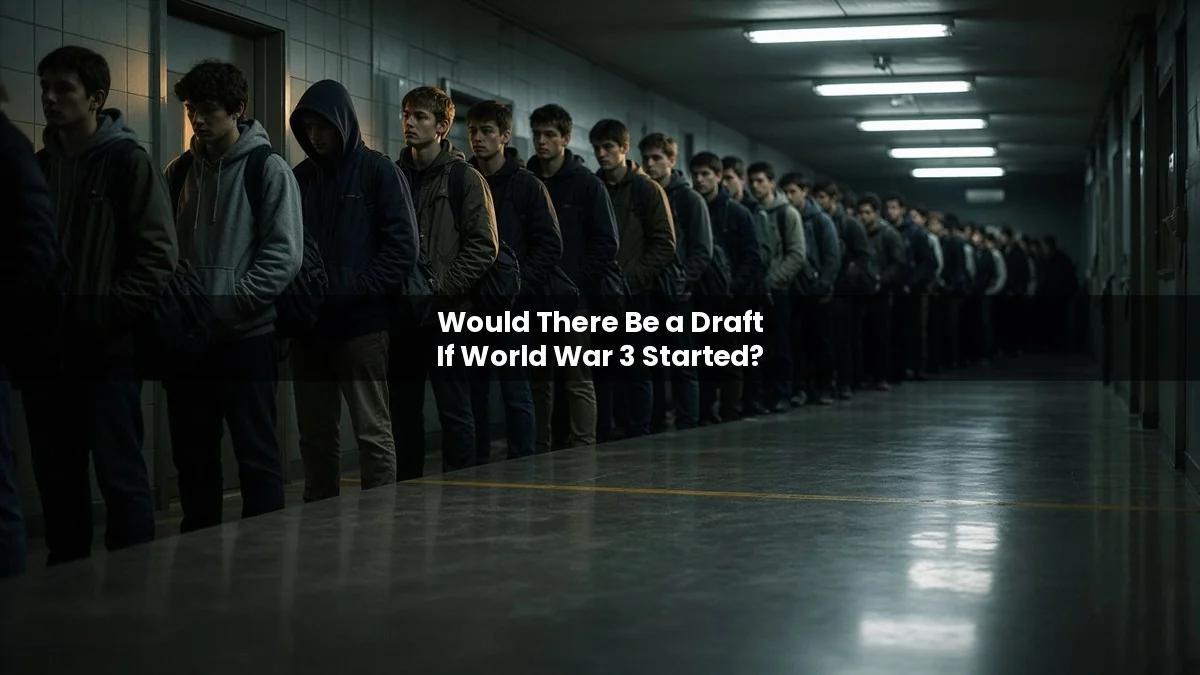
Short answer: not automatically. The United States has not drafted anyone since 1973, and a war alone would not restart conscription. Congress would have to pass a law and the President would have to sign it. If that happened, a public lottery based on birthdays would decide who gets called first, starting with men who turn 20 that year.
This guide explains how a draft would actually work, who would be called, who could be exempt, and what changes on December 18, 2026, when automatic registration becomes law. We label each point as an established fact, an official plan (what current rules say would happen), or a hypothetical.
Key facts at a glance
- Last draft: induction authority expired in 1973. Since then the US military has been all-volunteer. Established.
- Who must register today: almost all male US citizens and male immigrants aged 18 to 25. Established (Selective Service System).
- What changes soon: the 2026 defense law (Public Law 119-60, signed December 18, 2025) makes registration automatic for men aged 18 to 26, starting one year after signing. Established (U.S. Code, 50 U.S.C. § 3802).
- Registration is not a draft. Being registered does not mean you will serve. Established.
- Women: still not required to register. Established.
Would World War 3 automatically bring back the draft?
No. The President cannot start a draft by executive order. The Military Selective Service Act would first need to be amended by Congress to allow inductions again. Before that, the military would rely on active-duty troops, the National Guard and Reserves, and new volunteers who enlist after a war begins.
Hypothetical: a draft becomes realistic only in a long, large-scale war in which volunteers cannot fill the ranks. Even during the wars in Iraq and Afghanistan, Congress never reinstated it.
How a draft would work, step by step (official plan)
Selective Service publishes the steps it would follow. Congress could change them in the law that authorizes a draft, so treat this as the current plan, not a guarantee.
- Congress and the President authorize a draft. A new law allows inductions into the armed forces.
- The lottery. A public, live-streamed drawing pairs every birthday with a random number. That number sets the order in which men are called.
- Selective Service activates. State directors and reserve officers report for duty, and area offices open.
- Evaluation. Men with low lottery numbers report to a Military Entrance Processing Station (MEPS) for physical, mental and moral screening.
- Claims and induction orders. After screening, a registrant has 10 days to file a claim for exemption, postponement or deferment. Those found fit get induction orders and have 10 days to report.
- First inductees. Current plans require Selective Service to deliver the first draftees to the military within 193 days of the start of a crisis.
Who would be called first?
Under current rules, the order of call by age is:
- Men whose 20th birthday falls in the lottery year
- Then ages 21, 22, 23, 24 and 25, in that order
- Then 19-year-olds, and finally 18-year-olds
Within each age group, your lottery number decides your place in line. A low number means an early call; a high number may mean you are never called. In the Vietnam-era lottery of December 1, 1969, the highest number called for possible induction was 195.
Who could be exempt or deferred?
- People who fail the MEPS screening on medical, mental or moral grounds.
- Conscientious objectors, who can claim alternative civilian service.
- Hardship cases, such as men whose family depends on them.
- Some officials and ministers, under rules set by the law.
- Men on temporary visas (lawful nonimmigrant status), who are not required to register at all.
College students would generally be able to postpone service only until the end of the current semester, or the end of the academic year for seniors. Selective Service describes this postponement, but a new draft law could change it.
What changes with automatic registration in December 2026?
Fact: Section 535 of the fiscal 2026 National Defense Authorization Act rewrites the registration law. From one year after it was signed (December 18, 2026), the Director of Selective Service must automatically register every eligible man aged 18 to 26, using data from other federal agencies.
Fact: Selective Service withdrew its draft rule for putting this into practice in July 2026, before it was published for comment. The law itself still stands. Until the new system starts, men must register themselves, usually within 30 days of turning 18.
Key point: automatic registration only builds the list. It does not start a draft or require anyone to serve.
What about other countries?
Many countries still have conscription, including Israel, South Korea, Finland, Norway, Sweden and Switzerland. Several European countries have restored or expanded military service since Russia’s 2022 invasion of Ukraine. The UK ended National Service in the early 1960s and has no draft today.
Civilian borders are tightening too. Estonia plans to close its road crossings with Russia on December 1, 2026. See what happens if Estonia closes its border with Russia.
For the bigger picture of how a global war could unfold, read what happens if World War 3 starts. For related risks to the global economy, see what happens if the Strait of Hormuz closes and, since only Congress can restart a draft, what changes if Democrats win the midterms. You can also browse every what-if scenario.
Frequently asked questions
Will there be a draft if World War 3 happens?
Not automatically. Congress would have to pass a new law first. The US would rely on its volunteer forces, National Guard and Reserves before considering a draft.
Who gets drafted first in the US?
Men whose 20th birthday falls in the lottery year, in an order set by random lottery numbers. Ages 21 to 25 follow, then 19 and 18.
Can women be drafted?
No. Under current law, only men must register. Congress has debated including women, but the law has not changed.
What happens if you don’t register for Selective Service?
Failing to register is a federal crime, although prosecutions are extremely rare. Men who don’t register can lose access to federal jobs and some federal programs.
Does automatic registration mean the draft is coming back?
No. It only changes how names get on the list. Starting a draft would still require a separate act of Congress.