What Happens If You Swallow a Tooth?
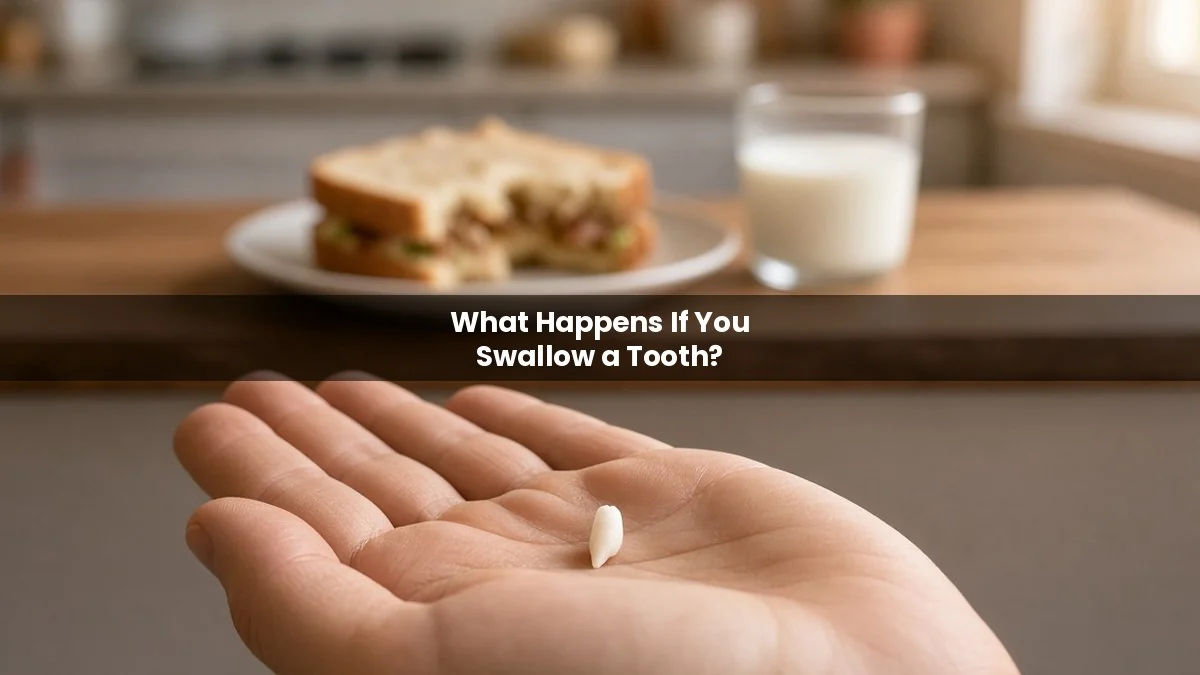
It happens more often than you’d think. A child’s wobbly baby tooth comes out in a sandwich. A crown pops off while you’re chewing toffee. A tooth gets knocked out in a fall or a game, and nobody can find it. Then comes the worrying question: what happens if you swallow a tooth?
Most of the time, the answer is reassuring. But there’s one situation that does need quick medical attention, and it’s easy to miss. This guide explains both, using the MSD Manual, NHS guidance and medical research on swallowed and inhaled objects. It also covers what to do about the gap left behind.
Short answer: A swallowed tooth is usually harmless. It passes through your gut and leaves in your stool, typically within about 3 to 5 days, and you don’t need to look for it. The real danger is if the tooth was inhaled into your airway instead. Coughing, wheezing or trouble breathing need urgent medical care.
Key facts at a glance
- Harmless in the gut: the MSD Manual says a swallowed tooth is harmless, and X-rays aren’t needed to look for it in the digestive tract.
- How long it takes: most swallowed objects pass in about 3 to 5 days, according to NHS guidance.
- Most objects pass on their own: about 80% to 90% of swallowed foreign objects pass naturally, medical reviews report. Fewer than 1% need surgery.
- The real risk: a tooth or crown that’s inhaled into the lungs can cause pneumonia if it isn’t removed.
- Knocked-out adult tooth: if you still have it, putting it back within 30 to 60 minutes gives it a good chance of reattaching, the MSD Manual says.
What happens to a tooth after you swallow it?
Status: established medical guidance.
A tooth is small, smooth and hard, so it usually travels through your digestive system without trouble. It moves from your esophagus to your stomach, then through your intestines, and leaves in your stool. Stomach acid won’t dissolve it in that time, and it won’t hurt your stomach.
The NHS’s Healthier Together guidance says most swallowed objects pass in about 3 to 5 days. It also says there’s no need to check your poo for the object, because it’s unpleasant and doesn’t help. The MSD Manual agrees that a swallowed tooth is harmless.
Broader medical reviews of swallowed objects back this up. About 80% to 90% of swallowed foreign objects pass on their own, 10% to 20% need removal with a camera called an endoscope, and fewer than 1% need surgery. Sharp, large or unusual objects, such as batteries and magnets, make up most of the risky cases. A tooth is low on that list.
If you’ve ever wondered about another common worry, read what happens if you swallow gum.
What if you inhaled the tooth instead of swallowing it?
Status: established medical evidence.
This is the important part. Sometimes a tooth, crown or piece of filling slips into your windpipe instead of your food pipe. This is called aspiration, and it can happen during a fall, a sports injury, a seizure or dental treatment. It’s more likely if the person was unconscious or drowsy when the tooth came out.
An inhaled tooth can block part of the lung. Medical case series describe symptoms such as:
- Sudden coughing or choking, sometimes followed by a persistent cough.
- Wheezing or a whistling sound when breathing.
- Shortness of breath or chest pain.
- Fever or coughing up blood-tinged mucus later on.
Some adults have no symptoms at first, which is why it can be missed. If an inhaled tooth stays in the lung, it can cause infections such as pneumonia, a collapsed section of lung or long-term lung damage. Doctors use a chest X-ray or CT scan to find it and a bronchoscope, a thin camera tube, to remove it.
The MSD Manual says that if a knocked-out tooth can’t be found, it may have been inhaled or swallowed, and a chest X-ray may be done to check the lungs.
When should you see a doctor?
Status: NHS and MSD guidance.
Get urgent help, or call emergency services, if there’s:
- Choking, or struggling to breathe.
- A cough, wheeze or chest pain that started when the tooth went missing.
- Blue, pale or mottled skin.
- Severe tummy pain or repeated vomiting.
Contact a doctor or nurse soon if there’s:
- Trouble swallowing, drooling or feeling like something is stuck in the throat.
- Mild but ongoing stomach pain, or trouble pooing.
- Blood in the stool or black stool.
- A fever, or you just feel worse and are worried.
If none of these happen, the NHS says you can simply keep an eye on how you feel.
What if a child swallows a baby tooth?
Status: established guidance.
This is very common, especially when a loose tooth comes out while eating. A baby tooth is small and smooth, so it nearly always passes without any problem. Watch for the same warning signs above, especially coughing or breathing trouble.
And if the tooth fairy is part of your family’s routine, a note explaining that the tooth was swallowed is a popular solution.
Baby teeth that are knocked out shouldn’t be put back in. The MSD Manual says reimplanting them can cause infection and may interfere with the adult teeth coming in.
What if you swallow a crown, cap or filling?
Status: established guidance.
The same rules apply. A swallowed crown or filling usually passes within a few days. The bigger concern is what’s left in your mouth. Call your dentist and explain what happened. They can protect the exposed tooth and make a new crown or filling.
If something was swallowed or inhaled during dental treatment, dentists and hospitals take it seriously. NHS guidance from Guy’s and St Thomas’ explains that you may need an X-ray to confirm whether it went into your stomach or your lungs.
What should you do about the missing tooth?
Status: established dental guidance.
If an adult tooth was knocked out and swallowed, it can’t be put back. A swallowed tooth isn’t safe or practical to reuse. But you should still see a dentist promptly, ideally the same day. They’ll check for broken roots, damaged gums or injured nearby teeth.
Later, your dentist may suggest replacing the tooth with:
- A dental implant, a titanium post placed in the jaw with a crown on top.
- A bridge, a false tooth held in place by the teeth on either side.
- A partial denture, a removable replacement.
If you still have the knocked-out tooth: the MSD Manual says to hold it by the crown, not the root, rinse it gently for 10 seconds if it’s dirty, and try to put it back in its socket. If you can’t, keep it in milk or salt water and get to a dentist fast. Reimplanted within 30 minutes to an hour, it has a good chance of reattaching.
Fun fact: teeth aren’t bones, even though both are hard and contain calcium. Enamel, the outer layer of your teeth, is the hardest substance in the human body. Read about the rest of your skeleton in what would happen if the human body lost its bones.
Fact vs myth
- Fact: a swallowed tooth usually passes harmlessly in a few days.
- Fact: an inhaled tooth is a medical problem and needs a doctor.
- Myth: you need to search your stool to make sure the tooth passed. The NHS says that isn’t necessary.
- Myth: a swallowed tooth will damage your stomach or intestines. It’s small and smooth, and the MSD Manual calls it harmless.
FAQ
Is it dangerous to swallow a tooth?
Usually not. A swallowed tooth normally passes through the digestive system and comes out in your stool within a few days. The danger is if it went into your airway instead.
How long does it take to pass a swallowed tooth?
Most swallowed objects pass in about 3 to 5 days, according to NHS guidance.
How do I know if I swallowed or inhaled my tooth?
Coughing, wheezing, chest pain or shortness of breath suggest it may have been inhaled. If you notice these, get medical help. A doctor may use a chest X-ray to check.
Do I need to look for the tooth in my poo?
No. The NHS says searching your stool isn’t recommended, because it’s unpleasant and doesn’t help.
Can a swallowed tooth be put back in?
No. Once a tooth has been swallowed, it can’t be reimplanted. A dentist can replace it with an implant, bridge or denture.
The takeaway
Swallowing a tooth sounds alarming, but it’s usually a non-event. Your body handles it like any small, smooth object, and it’s gone within a few days. The one thing to watch for is breathing trouble, because an inhaled tooth needs a doctor. Otherwise, focus on the gap: see a dentist promptly, especially if an adult tooth was knocked out.
Curious about other body mysteries? Browse all our “what would happen if” scenarios.
This article is for general information and is not medical advice.
Sources
- MSD Manual (Consumer Version): Fractured, loosened, or knocked-out teeth
- NHS Healthier Together: Swallowing a foreign object
- Guy’s and St Thomas’ NHS Foundation Trust: Swallowing or breathing in an object during dental treatment
- PMC review: Endoscopic management of foreign bodies in the upper gastrointestinal tract
- PMC case series: Tracheobronchial tooth and dental prosthesis aspirations: 15 cases
- PMC case report: The lost crown: an aspirated tooth crown causing post-obstructive pneumonia