What Happens If a Mars Rover Loses Contact?
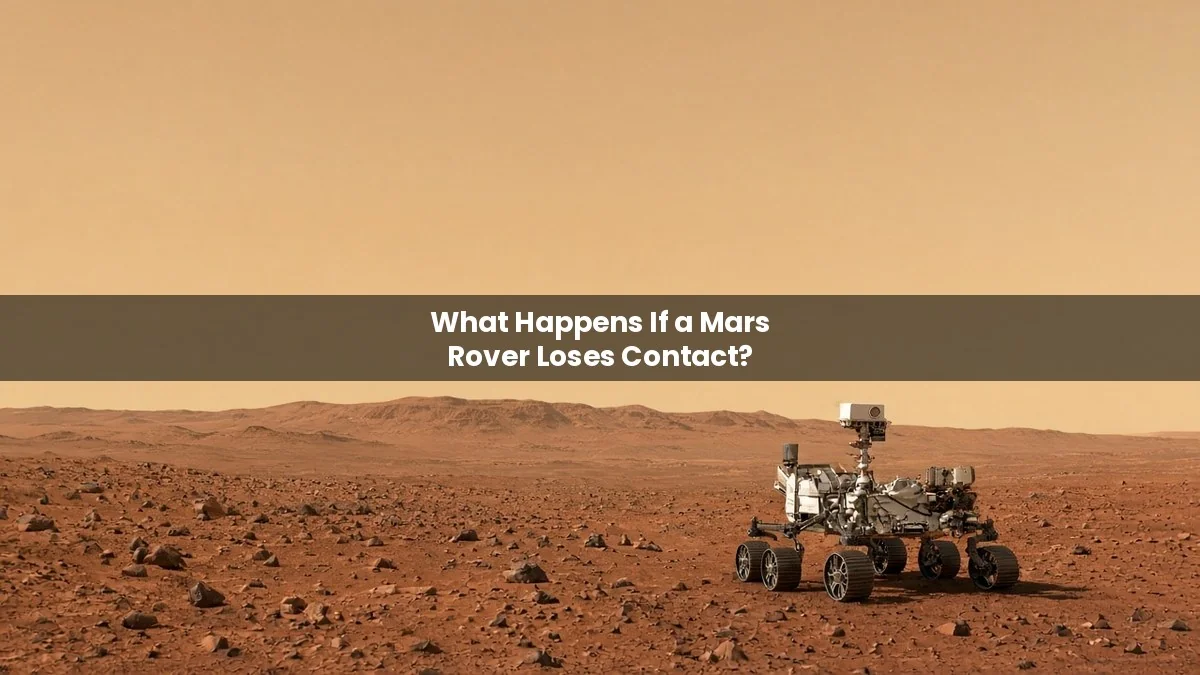
On November 19, 2026, NASA said science work on the Perseverance Mars rover is on hold while engineers investigate problems with both of its UHF radios. That raises a familiar fear: what happens if a Mars rover loses contact? In this case, the rover is not silent, but it can no longer send back the usual flood of images and science data.
Short answer: If a Mars rover loses contact on its main radios, it is not necessarily lost. Perseverance is still talking to Earth on a slower X-band link after both UHF radios failed. Science is paused to save bandwidth. NASA hopes to resume science by the end of November, but that timeline is not confirmed.
What happened to NASA’s Perseverance rover?
NASA’s official update, posted on November 19, says the rover is stable and still communicating with the team. The problem is the pair of UHF radios it uses to send large volumes of data up to Mars orbiters, which then relay those signals to Earth.
The trouble began on October 30. When the primary downlink radio was powered on, it did not send the usual “heartbeats,” or electronic pings, to the rover’s main computer. After 25 missed heartbeats, about 100 seconds of silence, onboard fault protection did what it was designed to do. It powered off the unresponsive radio, switched to a backup radio and put the rover into safe mode, shutting down non-essential systems.
“The rover’s main computer continually listens for that ping,” said Perseverance project manager Steven Lee of NASA’s Jet Propulsion Laboratory. “Every time it hears the ping, it resets a counter. However, if the radio stops sending the heartbeat due to a fault, after a certain number of missing heartbeats in a row, the computer swaps to the redundant one.”
After the team brought the rover out of safe mode, a second problem appeared: the backup UHF radio was transmitting at about half of its expected power. NASA has now stopped using both UHF radios until engineers can judge whether one or both are safe to turn back on. The root cause has not been announced.
What happens if a Mars rover loses contact with its main radios?
A Mars rover is built with layers of backup communication, because a complete blackout would end the mission. If the high-volume UHF path fails, the rover can still talk directly to Earth with its high-gain antenna over X-band, using NASA’s Deep Space Network.
That backup path is much slower. NASA says the direct-to-Earth link cannot carry the usual load of camera frames and instrument data, so science and imaging have been paused to keep the line free for diagnostic information. The stream of raw images on the rover’s mission website has stopped for now.
In other words, this is not a lost rover. It is a rover that can still receive commands and send status, but cannot do its science job until a faster radio path is restored, or until engineers accept a much thinner data diet. That is a different problem from the long, one-way delay faced by a probe such as Voyager 1 as it reaches one light-day from Earth. Perseverance is on Mars, close enough for a conversation, just not a high-speed one.
Is Perseverance lost, or still talking to Earth?
It is still talking, which is the key point when a Mars rover loses contact on its usual high-volume radios. NASA’s wording is careful: the rover is stable and in contact. What remains uncertain is when, or whether, the UHF radios can return to service. JPL has assigned a team to study the weak backup radio first, then to keep working on the primary radio.
The team hopes the rover can return to science by the end of November. That is a hope, not a guarantee. Until a radio is cleared or a workaround is in place, science stays paused. That is what happens today when this Mars rover loses contact on its UHF path: the mission continues, at a crawl.
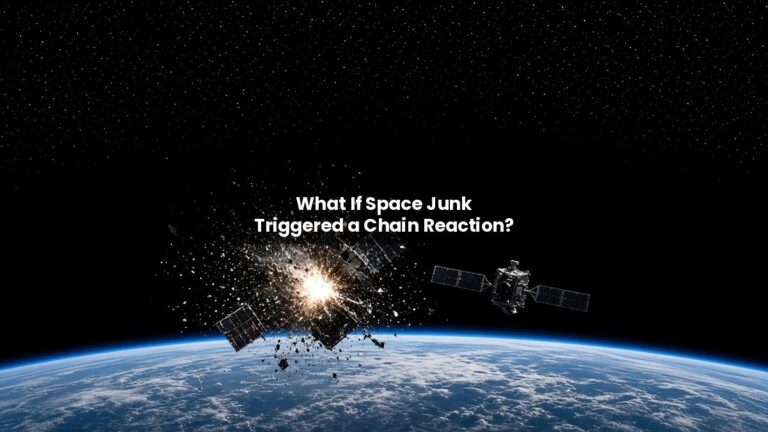
Orbiters and rovers share a relay network around Mars. If a rover cannot use that network, other missions are not automatically doomed, but the system has less flexibility. Our guide to what happens if space junk triggers Kessler syndrome covers a more extreme version of failing space infrastructure.
What about Mars Odyssey’s reaction wheel problem?
The same NASA update describes a separate issue on a different spacecraft. The 2001 Mars Odyssey orbiter, the longest-running mission at Mars, entered safe mode between November 4 and 6. Engineers found that one of its reaction wheels had stopped spinning.
Reaction wheels help a spacecraft point itself, including aiming solar arrays at the Sun, by speeding up or slowing down. Odyssey launched with four wheels. One failed in 2013. At least three are needed for normal orientation. With two wheels down, the orbiter would have to rely only on its hydrazine thrusters to stay pointed.
After 25 years in orbit, the team estimates Odyssey has enough hydrazine to do that for only one to two months if the wheel cannot be recovered. NASA is still refining that estimate. In one test, the wheel moved when commanded, but recovery is not confirmed. Science instruments are offline, and the goal is to resume science and relay work in the last week of November.
Odyssey has long been part of NASA’s Mars Relay Network, including early images from Phoenix and data from Spirit, Opportunity and Curiosity. A long outage would not strand Perseverance, which is using a direct-to-Earth link, but it would weaken a system NASA counts on.
When could science operations resume?
NASA has given two cautious windows. For Perseverance, the team hopes to return to science by the end of November. For Odyssey, the goal is the last week of November. Neither date is a promise.
Until then, the honest status is this: two flagship Mars missions are in contact, neither is confirmed lost, and both have paused science while engineers work the hardware. A Mars rover loses contact in the popular sense only if every radio path fails. That has not happened here.
Hardware can fail in other ways, too. For a different deep-space stress test, see what happens if Starship becomes fully reusable.
Frequently asked questions
Has NASA lost contact with Perseverance?
No. NASA says the rover is stable and communicating. Both UHF radios are out of use, so it is talking to Earth on a slower X-band link, and science imaging is paused.
What happens if a Mars rover loses contact completely?
If all radio paths failed, the team could no longer send commands or receive data, and the mission would be over unless contact returned. That is not the situation NASA has described for Perseverance.
Why can’t the rover just keep doing science on the slow link?
NASA says the direct-to-Earth connection cannot carry the usual volume of science and images. The team is reserving that narrow pipe for diagnostic data while it studies the radios.
Is Mars Odyssey going to run out of fuel?
Only if it has to keep pointing itself with thrusters alone. NASA estimates one to two months of hydrazine in that mode, and it is still refining the number. A test already showed the stuck wheel could move. Recovery is not confirmed.
When will we know more?
NASA said it will issue further updates as the investigations continue. The hoped-for return to science is late November 2026, but that could slip. Right now, the story is not that a Mars rover loses contact completely. It is that the fast radios are down.