What Happens If Your Gift Card Gets Drained?
Dozens of Woolworths shoppers in Australia opened their apps this week to find their digital gift cards empty. Someone else had spent the money, sometimes in another state. So what happens if your gift card gets drained? The answer depends on how it happened, how fast you act and who sold the card.
Short answer: If your gift card gets drained, the balance is usually spent within hours, and the money is hard to trace. Contact the card issuer right away with the card number and receipt, then report the theft. Some retailers replace the value, as Woolworths says it is doing, but refunds are not guaranteed by law.
This is a developing story. Below, we separate confirmed facts from expert theories that remain unproven.
What happened to the Woolworths gift cards?
ABC News first reported the problem on November 16, 2026. Customers across Australia said their Everyday WISH digital gift cards had been spent without their permission. Some lost up to A$500.
All the customers who contacted the ABC had bought their cards through the Everyday Rewards website or app. Most bought them during a promotion that offered 4% off. Several said their cards were never printed or shared.
One Sydney shopper told the ABC he bought a A$400 card on November 9. Three days later, a Big W store in another part of the city spent the full amount. He said his account used a complex password and two-factor authentication.
Woolworths acknowledged an issue affecting “a number of customer e-gift cards” and apologized. According to 7NEWS, the company has started issuing replacement cards so affected customers are fully reimbursed. However, as of November 18, Woolworths had not explained the cause, had not disclosed how many shoppers were affected, and had declined to say whether the issue was contained or whether personal information may have been compromised. One customer told the ABC that a Woolworths representative described the problem as an “IT malfunction” and said there had been no security breach, but Woolworths has not publicly confirmed that explanation.
How does a gift card get drained?
Thieves use several methods. Investigators in the US and Australia describe three common routes.
- Rack tampering. Criminals take physical cards from store racks, record the numbers or PIN, then reseal them. Once you buy and load the card, they spend the balance first. The Washington, D.C., Attorney General’s office warns that some thieves even swap the barcode, so your money loads onto their card.
- Online attacks. U.S. Homeland Security Investigations (HSI) says criminals also break into online gift card accounts through phishing or hacking, then use or sell the details.
- Victim-assisted scams. A caller pretends to be the government, a company or a relative. They pressure you to buy cards and read out the codes.
The Woolworths cases do not fit the first route. The cards were digital, so no one could tamper with them on a rack. Experts quoted by the ABC said an “enumeration attack,” where bots guess valid card numbers at scale, or a software flaw could explain it. Still, they cautioned that there is not enough information yet. Treat both ideas as theories, not findings.
What happens if your gift card gets drained before you use it?
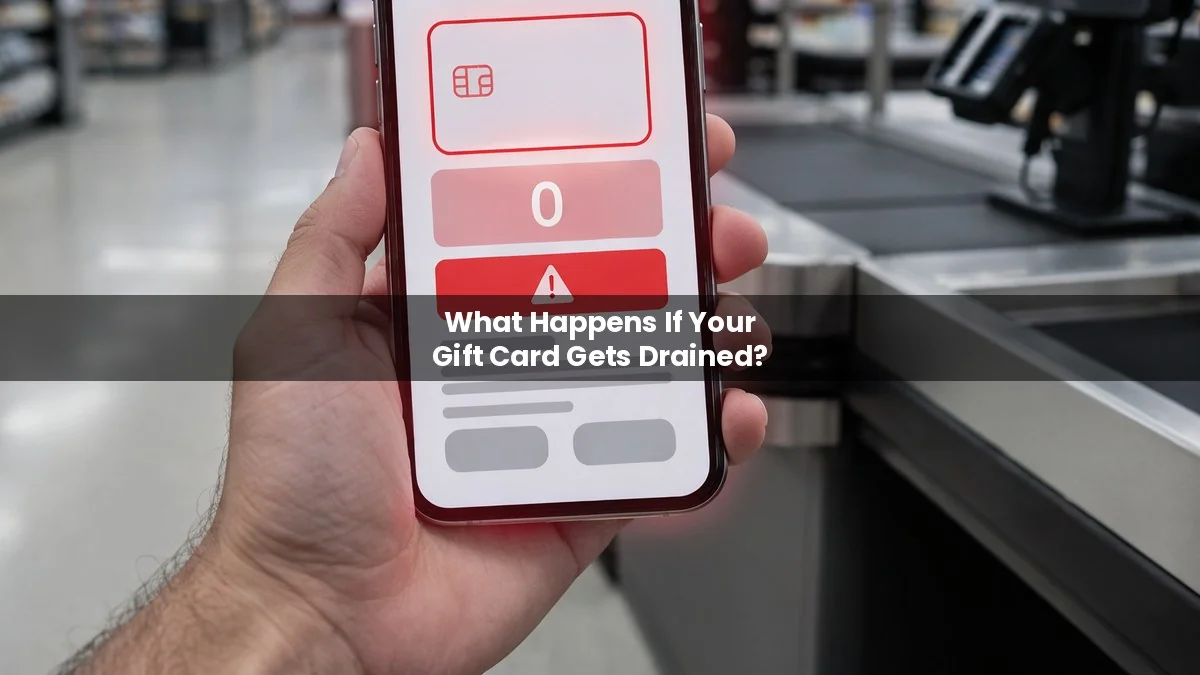
In most cases, you discover the loss at the checkout. The card shows a zero balance, or the transaction history lists stores you never visited.
Once a gift card gets drained, the money is usually gone. Thieves tend to spend drained balances quickly, often on goods they can resell. HSI says organized crime groups use stolen gift card value to buy products that are later shipped overseas and resold.
Next, your options depend on the seller. Many retailers investigate claims case by case. Some reissue the balance, especially when many customers report the same problem. Others refuse if they believe the code was shared.
That is why proof matters. Your receipt, the card number and screenshots of the transaction history make your claim far stronger.
How big is gift card fraud?
Exact numbers are hard to pin down. According to AARP, citing the Federal Trade Commission (FTC), U.S. consumers reported at least $233 million in losses from gift card-related scams in 2025, across more than 35,000 reports. The real total is likely much higher because many victims never report.
That figure mainly covers scams where victims paid with gift cards. The FTC does not publish a separate figure for drained cards.
Even so, single cases show the scale. AARP reports that the Texas Financial Crimes Intelligence Center arrested four suspects in a draining scheme at stores in Texas and Arkansas. Investigators found hundreds of tampered cards, worth more than $100,000 in potential losses from a single day.
What should you do if your gift card gets drained?
Act fast when a gift card gets drained. The sooner the issuer knows, the better your chances of a replacement. Follow these steps:
- Contact the issuer immediately. Use the phone number or email on the official website, not one from a search ad. Woolworths customers can email giftcard@customerservice.woolworths.com.au.
- Gather evidence. Save the receipt, card number, purchase date and screenshots of the balance and transactions.
- Report the theft. In the US, file at ReportFraud.ftc.gov. In Australia, use ReportCyber or Scamwatch. In other countries, use the national fraud reporting service.
- Secure your accounts. If the card was linked to an app, change that password. Also turn on two-factor authentication if it is not already on.
- Watch your bank statements. If you paid by card, check for other unfamiliar charges. Then contact your bank if anything looks wrong.
Be wary of anyone who contacts you offering to “recover” the money for a fee. That is a common follow-up scam.
How can you stop a gift card from being drained?
No method is perfect, but a few habits cut the risk that your gift card gets drained:
- Inspect physical cards for torn packaging, loose stickers or an exposed PIN. Pick a card from the back of the rack.
- Make sure the cashier scans the card in your hand, and keep the receipt.
- Check the balance soon after buying, and spend or give the card quickly.
- Only check balances on the issuer’s official website. Fake balance-check pages can steal your card number and PIN.
- Never pay a bill, fine or “tax” with gift cards. Real agencies do not ask for them.
Digital cards raise a separate risk. You cannot see tampering, so the security depends on the seller’s systems. Our guides to what happens if you visit a hacked website and what happens if a website isn’t patched explain how company-side flaws can expose customers.
Could this happen with other digital codes?
Yes. Any stored value tied to a code, such as game keys, vouchers or crypto, can be stolen once the code leaks. For example, see what happens if your GTA 6 code is stolen. When a whole platform is breached, losses can be far larger, as our explainer on what happens if a crypto exchange gets hacked shows. Scammers can also impersonate a person, not just a code. See what happens if scammers clone your voice.
Frequently asked questions
Can I get my money back if my gift card gets drained?
Sometimes. It depends on the issuer’s policy and your evidence. Woolworths says it is replacing affected e-gift cards, but other companies may refuse.
How do thieves drain gift cards without the physical card?
They only need the card number and PIN. They can steal these from store racks, fake balance-check sites, phishing or weaknesses in a seller’s systems.
Was there a Woolworths data breach?
That is not confirmed. As of November 18, 2026, Woolworths had not said what caused the problem, how many customers were affected, or whether personal information was exposed. A company representative’s “IT malfunction” comment to one customer has not been confirmed publicly.
Are digital gift cards safer than physical ones?
They avoid rack tampering. However, they depend on the seller’s online security, so neither type is risk-free.
Sources
- ABC News: Woolworths customers report hundreds of dollars stolen from digital gift cards (Nov 16, 2026)
- ABC News: Woolworths shoppers call for answers over gift card draining issue (Nov 18, 2026)
- 7NEWS: Woolworths to reimburse customers after digital gift card balances wiped
- AARP: Gift Card Scams, How to Avoid Them and Protect Yourself
- U.S. ICE / HSI: Tackling the Rise in Gift Card Fraud
- Office of the Attorney General for D.C.: Alert on Gift Card Scams