What Happens If You Hold Your Breath Too Long?
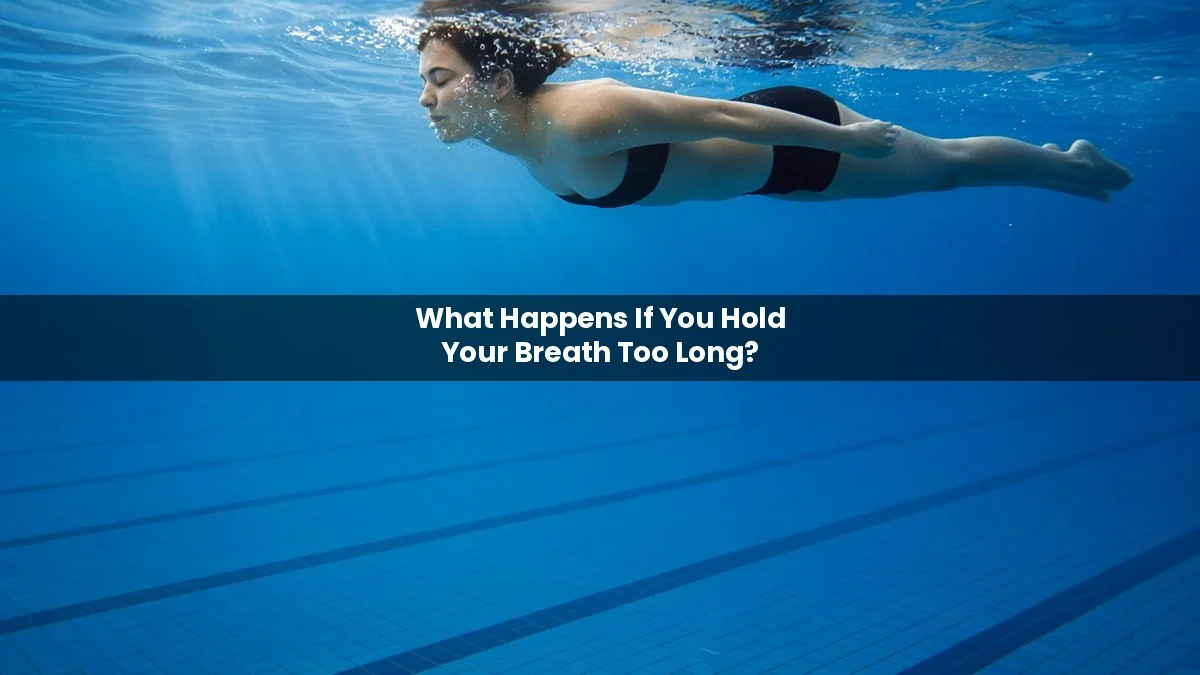
Kids do it in the bath. Swimmers do it to see who can stay under longest. Some people do it without noticing when they’re stressed. But what happens if you hold your breath too long? Can you pass out? Could you hold it until you die?
On dry land, your body has a built-in safety switch that almost always wins. Underwater, that switch can fail, and that’s where breath-holding becomes deadly. This guide explains what happens second by second, why the urge to breathe is driven by carbon dioxide rather than oxygen, and why public health agencies warn against breath-holding games in pools.
The short answer
- On land: if you hold your breath long enough to pass out, your body starts breathing again automatically. For healthy people, it’s rarely dangerous.
- Underwater: passing out means you can inhale water and drown, sometimes silently and without warning.
- The urge to breathe comes mainly from rising carbon dioxide (CO₂), not falling oxygen.
- Hyperventilating first lowers CO₂, delays that urge, and makes blacking out more likely. Never do it before swimming underwater.
- Typical limit: lab studies of untrained young adults record average holds of about 30 seconds at rest, with longer times after a deep breath. Elite freedivers train for over 11 minutes.
What happens when you hold your breath
Status: established physiology.
The moment you stop breathing, your cells keep using oxygen and keep making carbon dioxide. Two things change in your blood: oxygen slowly falls and CO₂ steadily rises.
Your brain monitors CO₂ closely. As it climbs, you feel a growing “air hunger”. Your diaphragm may start to twitch or contract on its own. These involuntary contractions are your body’s warning signs.
Eventually, you reach the “breaking point”, when the urge becomes impossible to ignore and you gasp for air. A 2025 study of 78 young adults described this breaking point as an involuntary respiratory act that overrides voluntary breath-holding to prevent unconsciousness. In that study, the average resting hold was about 30 seconds. Other research cited by the same authors found average holds of around 78 seconds when people started from a full breath.
Why CO₂, not oxygen, makes you breathe
Status: established.
This is the key to understanding why breath-holding can be dangerous. As the American Red Cross explains, it’s the high carbon dioxide level, not the low oxygen level, that gives you the feeling of needing to take a breath.
Normally that’s fine, because CO₂ rises fast enough to make you breathe long before oxygen gets dangerously low. But if you deliberately lower your CO₂ first, the warning comes too late.
What if you pass out on land?
Status: established.
If a healthy person managed to ignore the breaking point and hold on until they fainted, they would lose consciousness and their brainstem would restart breathing. You can’t hold your breath until you die on dry land, because you can’t keep holding it once you’re unconscious.
That’s also why toddler “breath-holding spells” are usually harmless. The American Academy of Pediatrics’ HealthyChildren.org says these spells often follow fear, pain or a tantrum. A child may turn blue or pale and briefly pass out, then recover on their own, and most children outgrow them by about age 6. Parents should still mention them to a pediatrician and call for help if normal breathing doesn’t return.
Why it’s so dangerous underwater
Status: established, from case reviews.
Underwater, losing consciousness is the start of drowning. The CDC published a case review of 16 drownings in New York State between 1988 and 2011 linked to what it called “dangerous underwater breath-holding behaviors”. Four were fatal. All four people who died were strong, experienced swimmers aged 17 to 22, and all had hyperventilated before going under.
The CDC identified three risky behaviors:
- Intentional hyperventilation before or during swimming underwater.
- Static apnea, meaning staying still underwater for as long as possible, including breath-holding contests.
- Hypoxic training, such as long underwater laps or repeated long breath-holds.
Most of these incidents happened in pools with lifeguards on duty, which shows how fast and quiet they can be. Since 2014, New York City’s health code has required pools to post warning signs about these behaviors.
Hypoxic blackout vs shallow water blackout
The two terms are often mixed up. The Red Cross explains the difference:
- Hypoxic blackout: you hyperventilate, push down your CO₂, then run out of oxygen before you feel the urge to breathe.
- Shallow water blackout: a freediver holds their breath at depth. As they rise, water pressure falls and the oxygen in their lungs effectively becomes more diluted, so they black out near the surface.
How do freedivers hold their breath so long?
Status: established records; mechanisms partly understood.
Elite freedivers train their bodies and minds to tolerate high CO₂, and they use the “diving response”. Research reviews describe how cold water on the face during a breath-hold slows the heart, narrows blood vessels in the limbs and sends more blood to the heart and brain. The spleen can also contract, releasing extra red blood cells that carry oxygen.
The results are astonishing:
- Guinness World Records lists Branko Petrović of Serbia with a static apnea breath-hold of 11 minutes 54 seconds, set in Dubai in 2014.
- With pure oxygen breathed beforehand, divers have gone much longer. Guinness reported Budimir Šobat’s breath-hold of almost 25 minutes in 2021.
These athletes train for years, always under close supervision, with safety divers watching every second. They’re not a model for anyone to copy in a pool.
What happens to your brain if oxygen runs low?
Status: established.
A normal breath-hold on land ends long before brain damage could happen. But if someone loses consciousness underwater and isn’t rescued, their brain is starved of oxygen, and brain cells begin to die within minutes. Our guide to what happens when the brain runs out of oxygen explains that timeline in detail, and why fast rescue and CPR matter so much.
How to stay safe
Status: guidance from the CDC, Red Cross and lifesaving organizations.
- Never hyperventilate before swimming underwater.
- Skip breath-holding contests and long underwater laps, especially alone.
- Surface when you feel the urge to breathe. Don’t try to push past it.
- Freedive only with training and a buddy who watches you the whole time.
- Learn CPR. The Red Cross and similar groups offer short courses.
Fact vs projection vs speculation
- Established: CO₂ drives the urge to breathe; hyperventilation delays it; breath-hold blackouts can cause drowning in strong swimmers; the Guinness records above.
- Variable: how long any one person can hold their breath. It depends on lung size, fitness, practice and how they’re tested.
- Myth: that “holding your breath until you die” is possible on land. Your body takes over once you pass out.
FAQ
Can you die from holding your breath?
Not on land in normal circumstances, because you’d pass out and start breathing again. Underwater, holding your breath too long can cause a blackout and drowning.
How long can the average person hold their breath?
Studies of untrained adults find averages from about 30 seconds at rest to over a minute after a deep breath. It varies a lot from person to person.
Why do I feel my chest twitch when I hold my breath?
Those are involuntary contractions of your diaphragm, a normal response to rising carbon dioxide. They’re a warning to breathe.
Is hyperventilating before swimming underwater dangerous?
Yes. It lowers carbon dioxide, delays the urge to breathe and raises the risk of blacking out underwater. The CDC links it to deaths among experienced swimmers.
Can breath-holding damage your brain?
A normal breath-hold on land won’t. Brain injury happens when oxygen is cut off for minutes, such as in drowning. Lack of oxygen can also affect memory; see what would happen if the human brain lost memory.
The takeaway
Holding your breath is safe on land because your body won’t let you go too far. Underwater, the rules change. Hyperventilation and breath-holding games remove your natural warning system, and even strong swimmers can black out without a sign. Surface when your body tells you to, and never hold your breath underwater alone.
Athletes sometimes try to buffer acid buildup in the blood before hard efforts. See what happens if you take baking soda before a workout.
Related reads: what happens if you go to space without a spacesuit, or browse all our “what would happen if” scenarios.
This article is for general information and is not medical advice.
Sources
- CDC MMWR: Fatal and Nonfatal Drowning Outcomes Related to Dangerous Underwater Breath-Holding Behaviors, New York State, 1988–2011
- American Red Cross: Shallow Water Blackout vs. Hypoxic Blackout
- Factors Affecting Voluntary Breath-Holding Duration and Breaking Point in Young Adults (2025)
- HealthyChildren.org (AAP): Breath-holding spell
- Guinness World Records: Longest duration breath hold, freediving static apnea (male)
- Guinness World Records: Freediver holds breath for almost 25 minutes
- Foster GE, Sheel AW. The human diving response, its function, and its control. Scandinavian Journal of Medicine & Science in Sports, 2005.