What Happens During a Storm Power Cut? Storm Boelo Explained
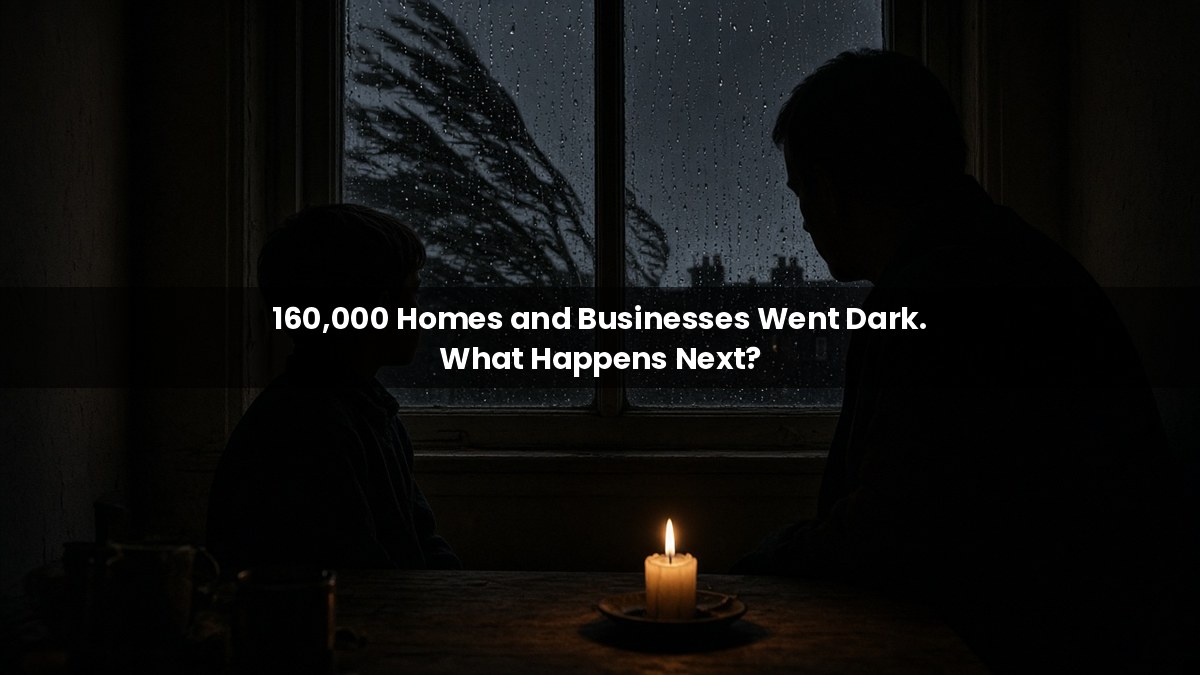
Storm Boelo tore across the UK this weekend, and at its peak more than 160,000 homes and businesses were left in the dark. If you have ever lost electricity in a storm, you know how fast normal life stops. So what really happens during a storm power cut? How long can your food last, who fixes the fault, and can you get paid for the trouble? Here is a clear, practical guide.
This is a developing story. Figures below come from official updates on Sunday, October 25, 2026, and may change as crews reconnect homes.
What Happened During Storm Boelo?
Storm Boelo was the second named storm in as many days. It followed Storm Austen, which brought strong winds to south-west England on Friday.
According to The Guardian, the Met Office recorded gusts of 82mph on the island of Tiree and 84mph in Argyll and Bute. Sadly, two men were killed by falling trees on Sunday, one in south-west Scotland and one in London.
The Energy Networks Association (ENA) said 161,400 customers in Great Britain were without power at 3pm on Sunday. By 7pm, that number had fallen to 90,600. Overall, 691,700 customers had been reconnected after Storms Austen and Boelo.
Why a Storm Power Cut Can Take Days to Fix
Most outages start with damage to overhead lines. In fact, a storm power cut often begins when trees or debris hit the wires. Falling trees and flying debris can snap cables or bring down poles.
However, repairs are not always quick. The ENA explained that high winds made it unsafe for engineers to climb up equipment. In addition, fallen trees and flooding blocked roads to some sites.
For example, Scottish and Southern Electricity Networks (SSEN) said it expected most remaining customers to be back on supply by Monday. Even so, it warned that some homes might wait until Tuesday.
Meanwhile, the Scottish Government warned that adverse weather could return early in the week. That could slow repairs further.
What Happens in Your Home When the Power Goes Out
In the first few hours of a storm power cut, the main issues are light, heat, and communication. Your Wi-Fi router stops working. Electric heating and many modern boilers stop too. Phone batteries become precious.
Then the clock starts ticking on your food. According to FoodSafety.gov, which shares US Department of Agriculture advice:
- A fridge keeps food safe for up to 4 hours if you keep the door closed.
- A full freezer holds a safe temperature for about 48 hours.
- A half-full freezer lasts about 24 hours.
After 4 hours without power, throw out perishable food such as meat, fish, eggs, and leftovers. Also, never taste food to check if it is safe. As the agency puts it: when in doubt, throw it out.
Frozen food can be refrozen if it still has ice crystals or is at 40°F (4°C) or below. However, its quality may suffer.
Staying Safe During a Storm Power Cut
Safety comes first, especially outside. The ENA urges people to stay well clear of damaged or fallen power lines. In the UK, you can call 105 for free to report damage. If there is an immediate danger, call 999.
Inside, keep things simple:
- Use torches (flashlights) instead of candles where possible.
- Keep phones charged and save battery by lowering screen brightness.
- Unplug sensitive electronics to protect them when power returns.
- Never use a gas camping stove, barbecue, or generator indoors, because these can produce dangerous carbon monoxide.
- Check on elderly neighbors and anyone who relies on medical equipment.
Natural disasters often hit power networks first. For a bigger-picture look at extreme events, see our explainer on what happens if an earthquake reached an impossible intensity.
Who Fixes the Fault and How to Report It
In Great Britain, your energy supplier does not fix power cuts. Instead, your local network operator does. According to Ofgem, the energy regulator, you can report an unplanned outage on your operator’s website or by calling 105.
Ofgem also sets deadlines. Normally, operators must restore supply within 12 hours. During severe weather, the limit stretches to 24 hours for “category 1” storms and 48 hours for “category 2” storms. Notably, these categories are not the same as Met Office warning levels. Instead, they depend on how many faults the weather causes on the network.
Can You Get Compensation for a Storm Power Cut?
Yes, in many cases. If a storm power cut lasts long enough, Ofgem says payments are automatic, so you usually do not need to make a claim. Here is how the severe weather rules work:
- Category 1 storm: £90 if you are off supply for 24 hours, plus £45 for every extra 6 hours.
- Category 2 storm: £90 if you are off supply for 48 hours, plus £45 for every extra 6 hours.
- Maximum payment: £2,235 under either category.
Outside severe weather, homes can get £100 in some cases. However, Ofgem says you will not be paid for damage to electrical equipment or appliances.
It is not yet clear which category Storm Boelo will fall into in each region. That decision depends on network data, so check with your local operator if you were off supply for a long time.
Extra Help for Vulnerable People
Some people cannot safely wait hours for power. This includes people who use medical equipment at home, older people, and families with very young children.
That is why the Priority Services Register exists. Ofgem says network operators must offer registered customers extra help during power cuts. For example, they may provide battery packs to charge phones or medical devices. The exact support varies by company, so it is worth signing up before the next storm.
How to Prepare for the Next Storm Power Cut
Storm season is only just starting. So a little planning now can make the next outage much easier. Consider these simple steps:
- Keep a torch, spare batteries, and a power bank in an easy-to-find place.
- Save your network operator’s details and the number 105 in your phone.
- Keep some food that does not need cooking or a fridge.
- Fill your freezer, since a full freezer stays cold longer.
- Secure loose garden items before strong winds arrive, as the Met Office advises.
In short, a long storm power cut is more than an inconvenience. It can affect your food, your safety, and your wallet. However, knowing the rules, from the 4-hour fridge limit to automatic compensation, helps you stay calm and in control when the lights go out.