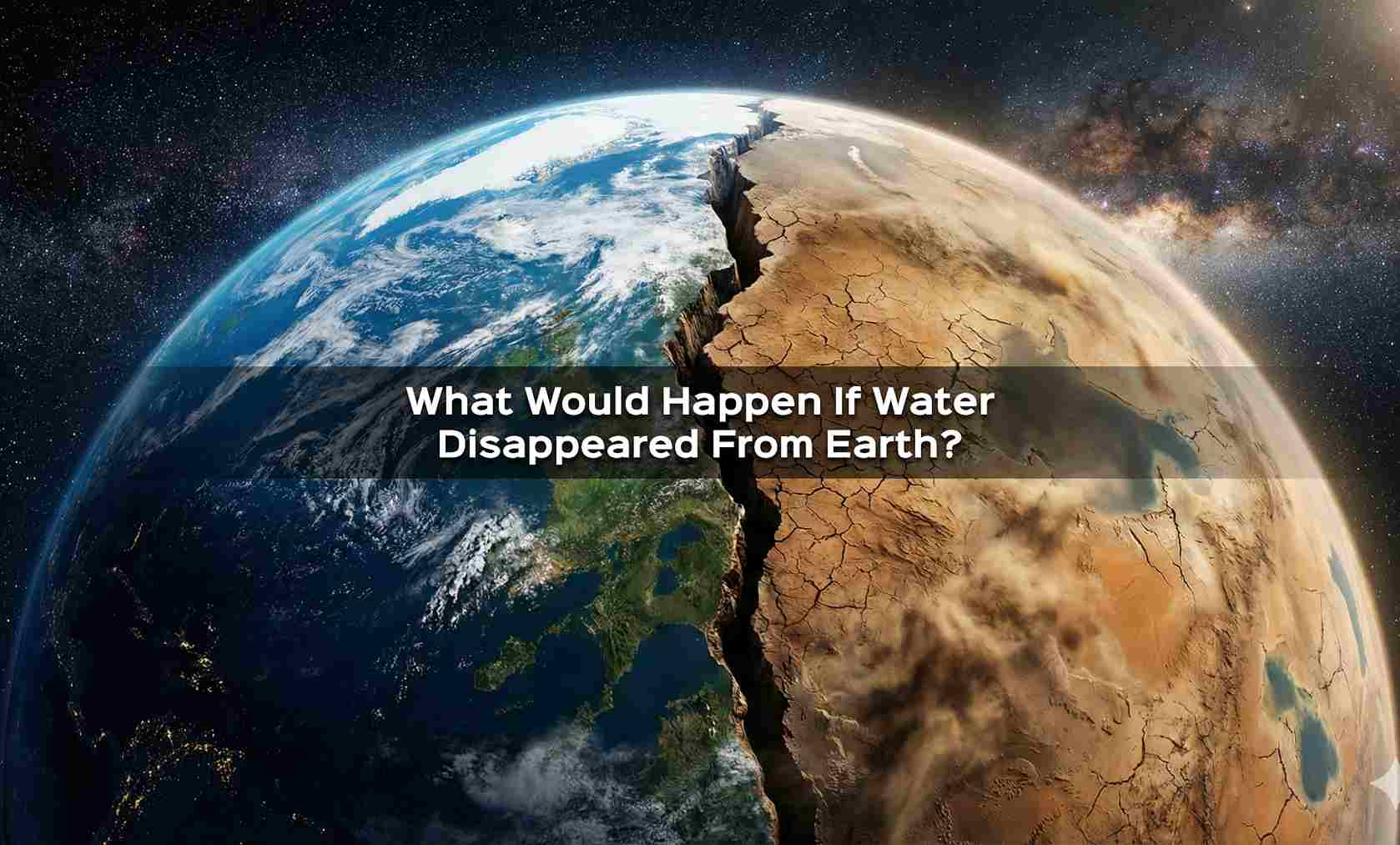
What Would Happen If Water Disappeared From Earth?
Imagine a World Where Water Vanishes Overnight
Imagine waking up tomorrow morning and something feels wrong.
The air is unusually dry. There are no clouds in the sky. No morning dew on the grass. You walk to the kitchen, turn on the tap… and nothing comes out.
You check your phone. Every news outlet is reporting the same headline:
All water on Earth has disappeared.
Not dried up slowly.
Not frozen.
Not polluted.
Gone.
It sounds impossible — almost like science fiction. But asking what would happen if water disappeared from Earth reveals just how deeply water is connected to every system that keeps our planet alive.
Let’s break it down step by step.
Quick Answer: What Would Happen If Water Disappeared?
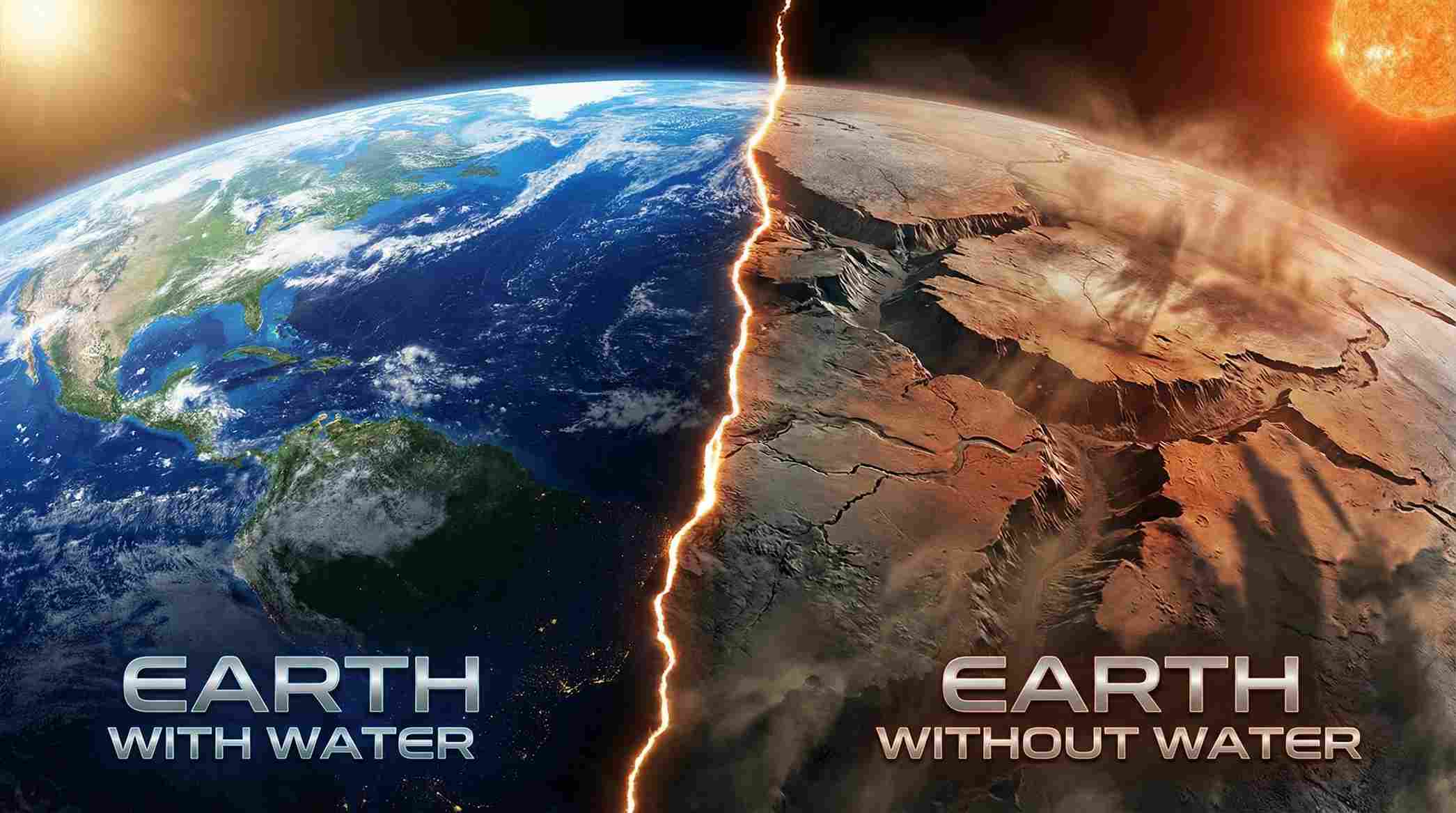
If water disappeared from Earth, life would collapse within days. Plants would die almost instantly, oceans would vanish, climate systems would fail, oxygen production would decline, and humans could not survive more than a few days due to dehydration. Over time, Earth would become a dry, lifeless planet similar to Mars.
Now let’s explore how that collapse would actually unfold.
The First Few Minutes: Global Shock
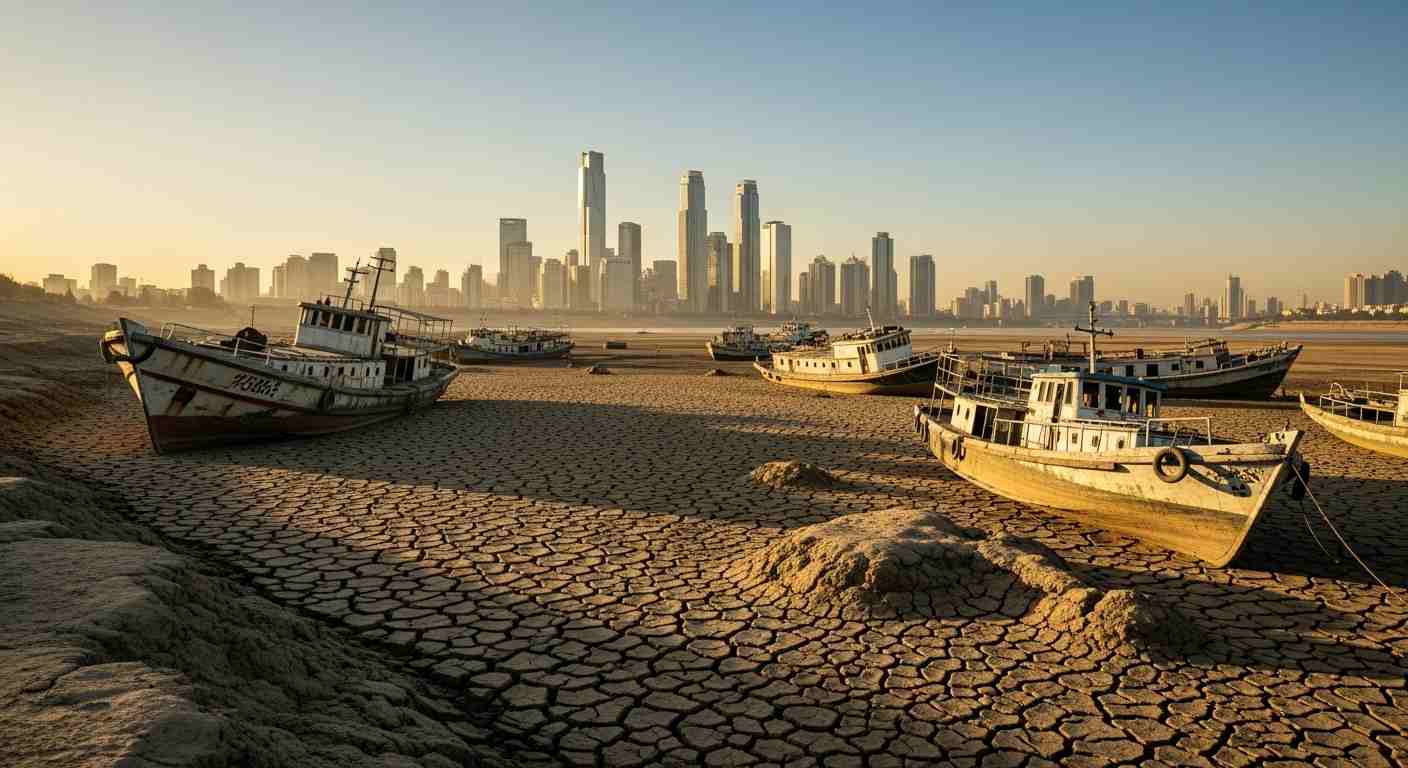
Water covers about 71% of Earth’s surface. The moment it disappears:
-
Oceans vanish
-
Rivers dry up
-
Lakes collapse into empty basins
-
Groundwater disappears
-
Even moisture in the air vanishes
The immediate effect would be atmospheric instability. Water vapor plays a major role in regulating temperature and weather patterns. Without it, the balance of Earth’s climate begins to fall apart.
Within minutes:
-
Coastal ecosystems collapse
-
Marine life dies instantly
-
Air becomes extremely dry
-
Panic spreads globally
The blue planet would no longer be blue.
The First Hour: Plants Begin Dying
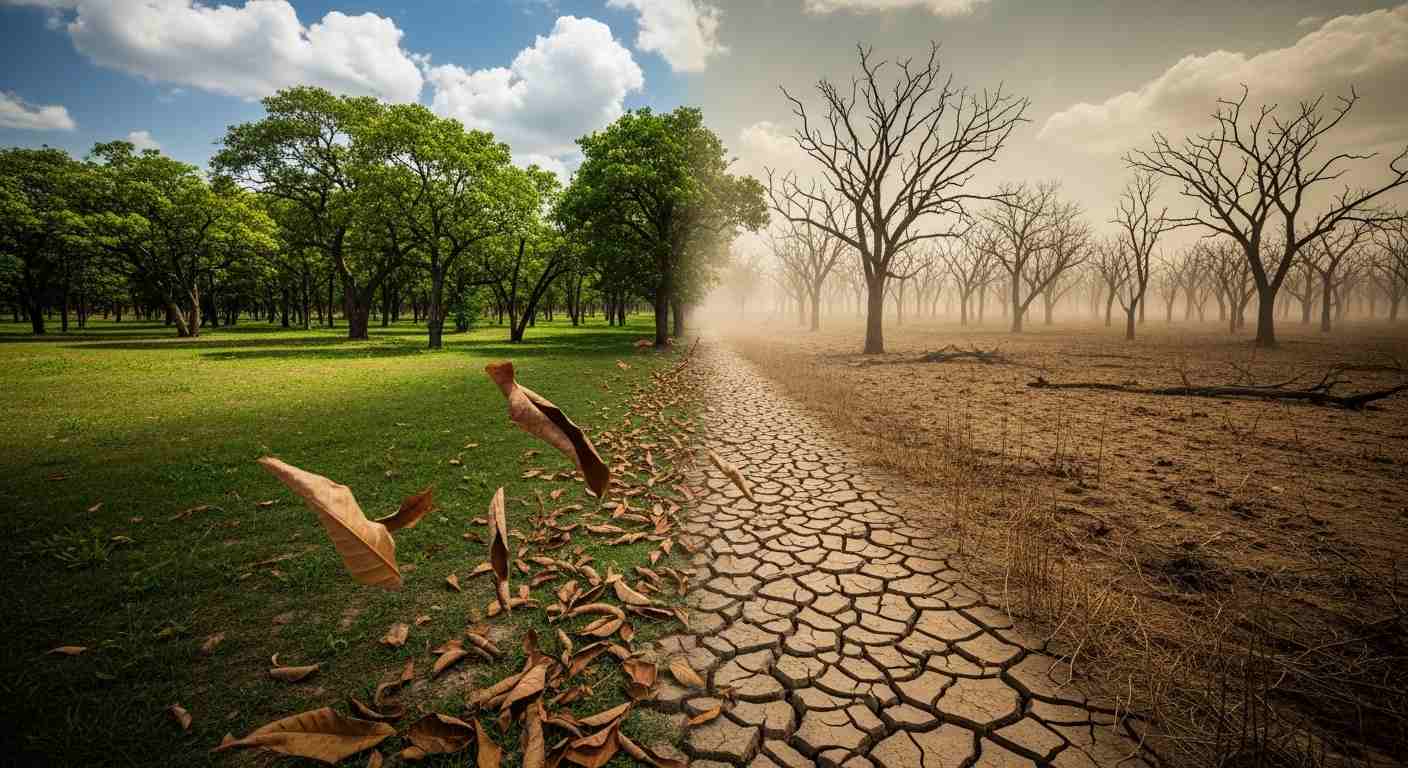
Plants are made up of roughly 80–90% water. They rely on water for:
-
Photosynthesis
-
Nutrient transport
-
Structural stability
Without water, photosynthesis stops immediately. Leaves wilt, crops collapse, forests begin to dry out.
Within hours:
-
Agricultural systems fail worldwide
-
Grasslands turn brown
-
Rainforests begin shrinking
-
Oxygen production starts decreasing
Most people don’t realize that plants and ocean plankton produce the majority of Earth’s oxygen. Without water, that oxygen supply begins shrinking over time.
The First 24 Hours: Human Survival Crisis
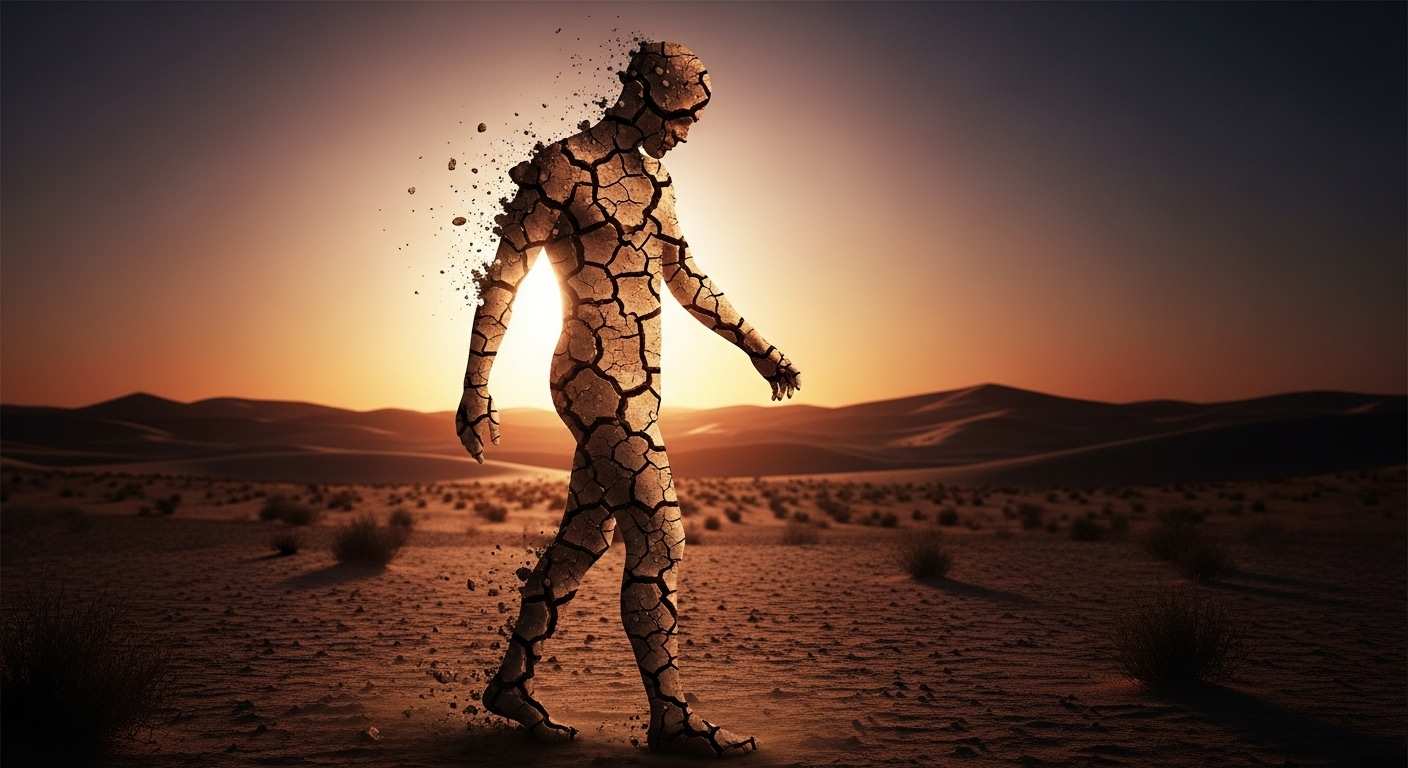
The human body is about 60% water. Blood plasma, cells, and organs all depend on it.
Without water:
-
Severe dehydration begins within hours
-
Blood thickens
-
Kidneys fail
-
Body temperature becomes unstable
Under extreme conditions, humans can survive about three days without water. In this scenario, there is no stored water anywhere — not in bottles, not in reservoirs, not in the ground.
Within 24 hours:
-
Hospitals overflow
-
Emergency systems collapse
-
Governments declare global catastrophe
-
Civilization begins breaking down
This would be the fastest collapse in human history.
The Oceans Are Gone: Climate Collapse Begins
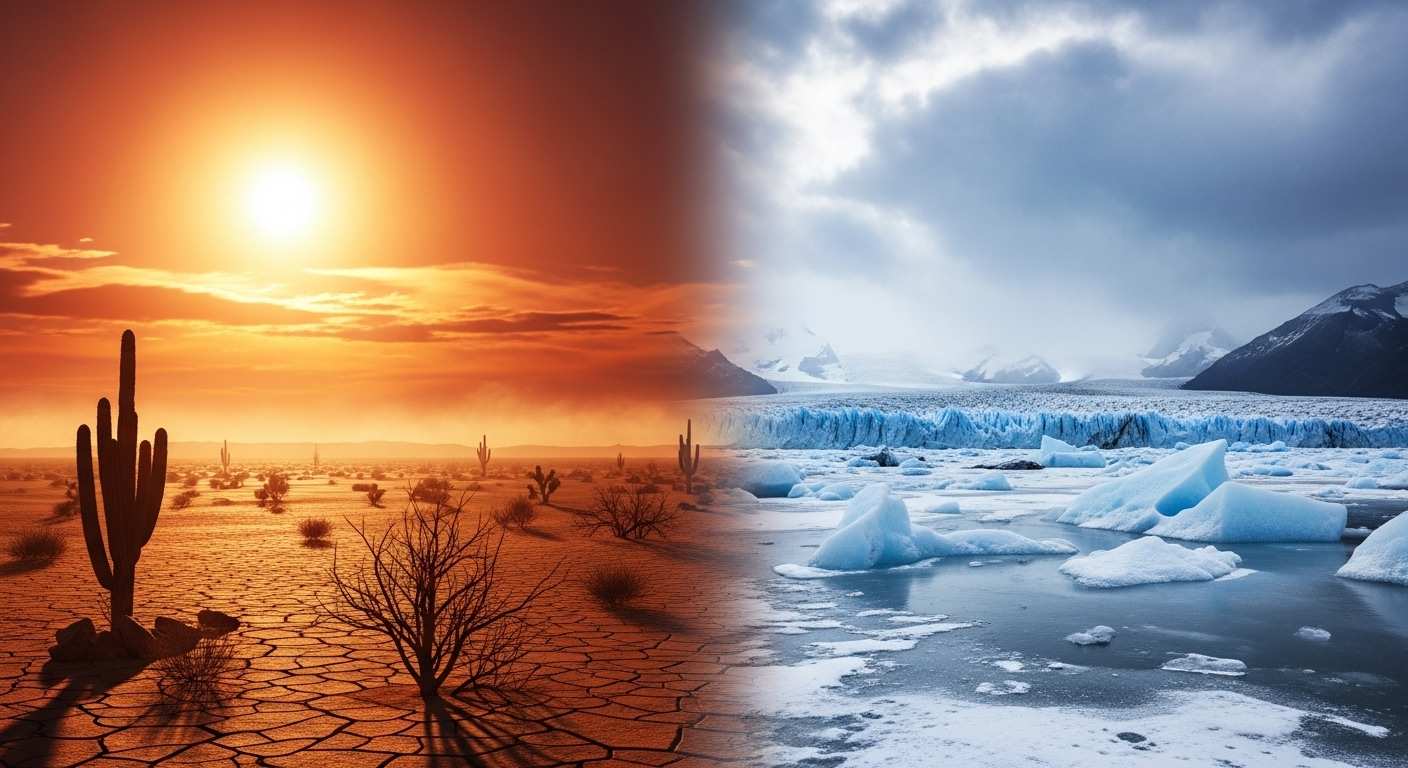
Oceans regulate global temperature by absorbing and distributing heat. They act as Earth’s climate stabilizers.
Without oceans:
-
Daytime temperatures spike dramatically
-
Nighttime temperatures drop sharply
-
Weather systems disappear
-
The water cycle ends completely
No evaporation means:
-
No clouds
-
No rain
-
No storms
-
No snowfall
Earth becomes a dry, unstable world with extreme temperature swings — similar to desert planets.
The Atmosphere Starts Changing
Water vapor is a greenhouse gas. It helps trap heat in the atmosphere.
Without it:
-
The greenhouse effect weakens
-
Long-term global cooling may begin
-
Climate patterns disappear entirely
At the same time, land heats up faster without oceans to absorb solar radiation.
This creates violent temperature shifts:
-
Scorching days
-
Freezing nights
The stable climate that allowed civilization to develop would be gone.
Underground Effects: Geological Instability
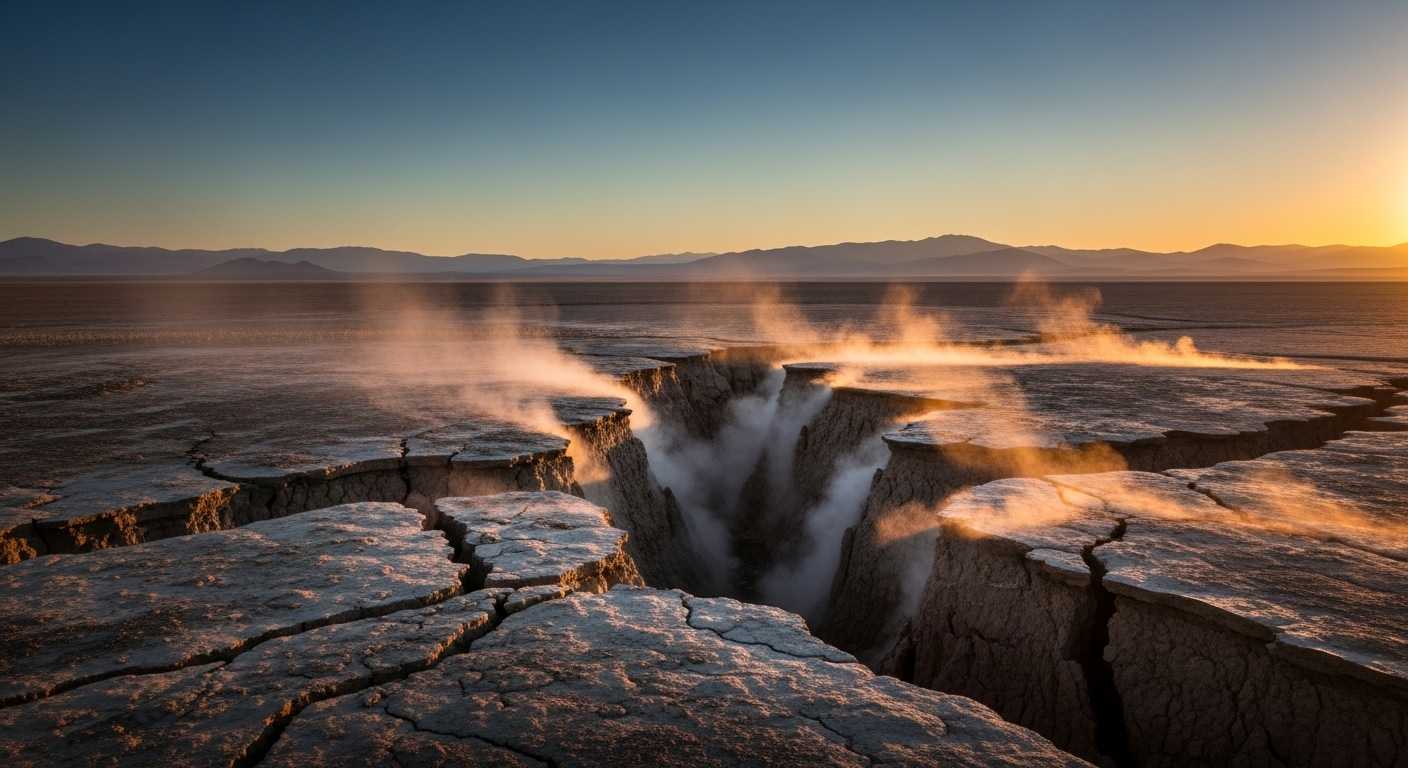
Water doesn’t just exist on the surface. It exists:
-
Inside soil
-
Within rocks
-
Deep underground
-
Between tectonic plates
Water acts as a lubricant for tectonic movement. Without it:
-
Earthquakes increase
-
Soil collapses
-
Land sinks in certain regions
-
Volcanic systems destabilize
Even magma formation is influenced by water content.
The geological balance of Earth would begin to shift.
The Collapse of Ecosystems
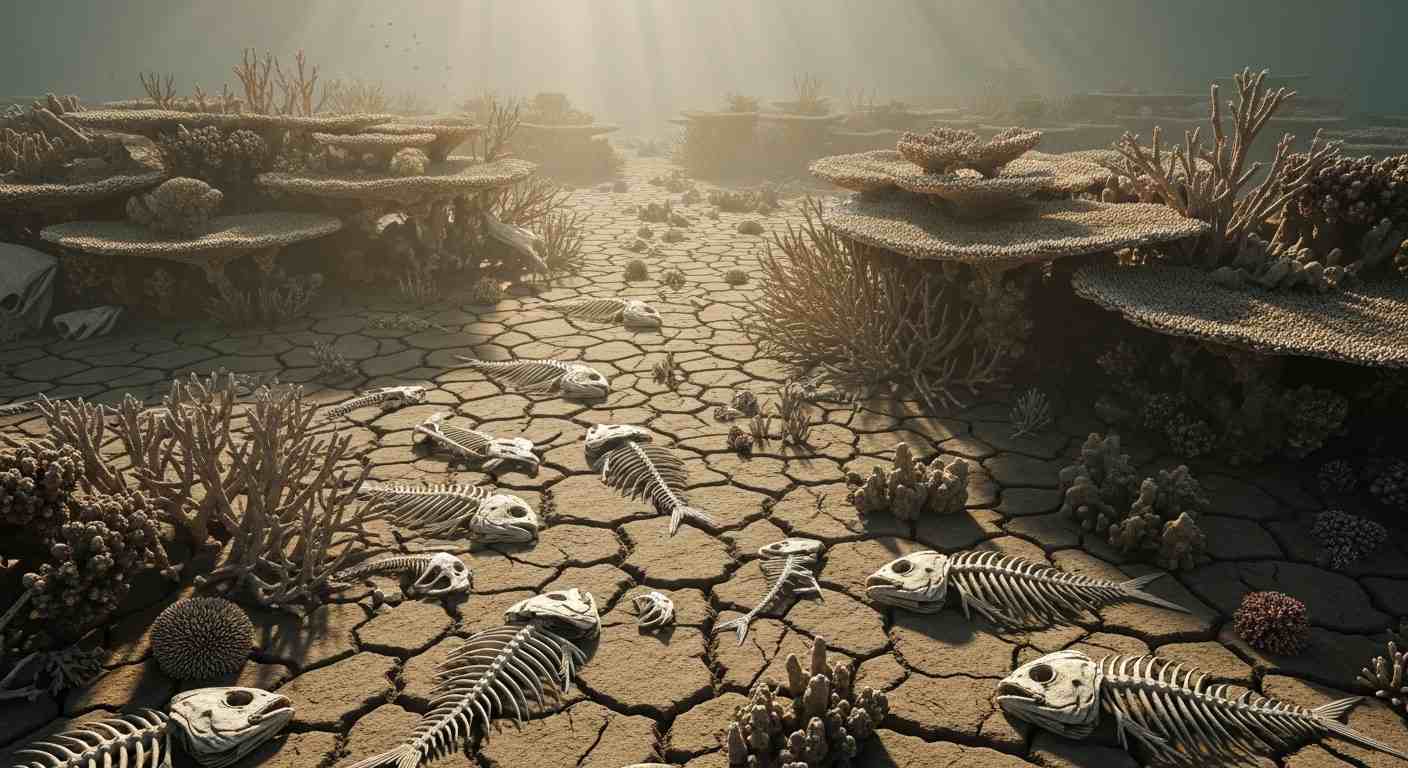
Aquatic life would disappear instantly:
-
Fish
-
Whales
-
Coral reefs
-
Plankton
Land animals might survive slightly longer, but dehydration and lack of plants would quickly wipe out most species.
Food chains collapse in stages:
-
Plants die
-
Herbivores starve
-
Carnivores lose prey
-
Ecosystems collapse
Within days to weeks, most complex life on Earth would be gone.
Oxygen Levels Begin to Decline
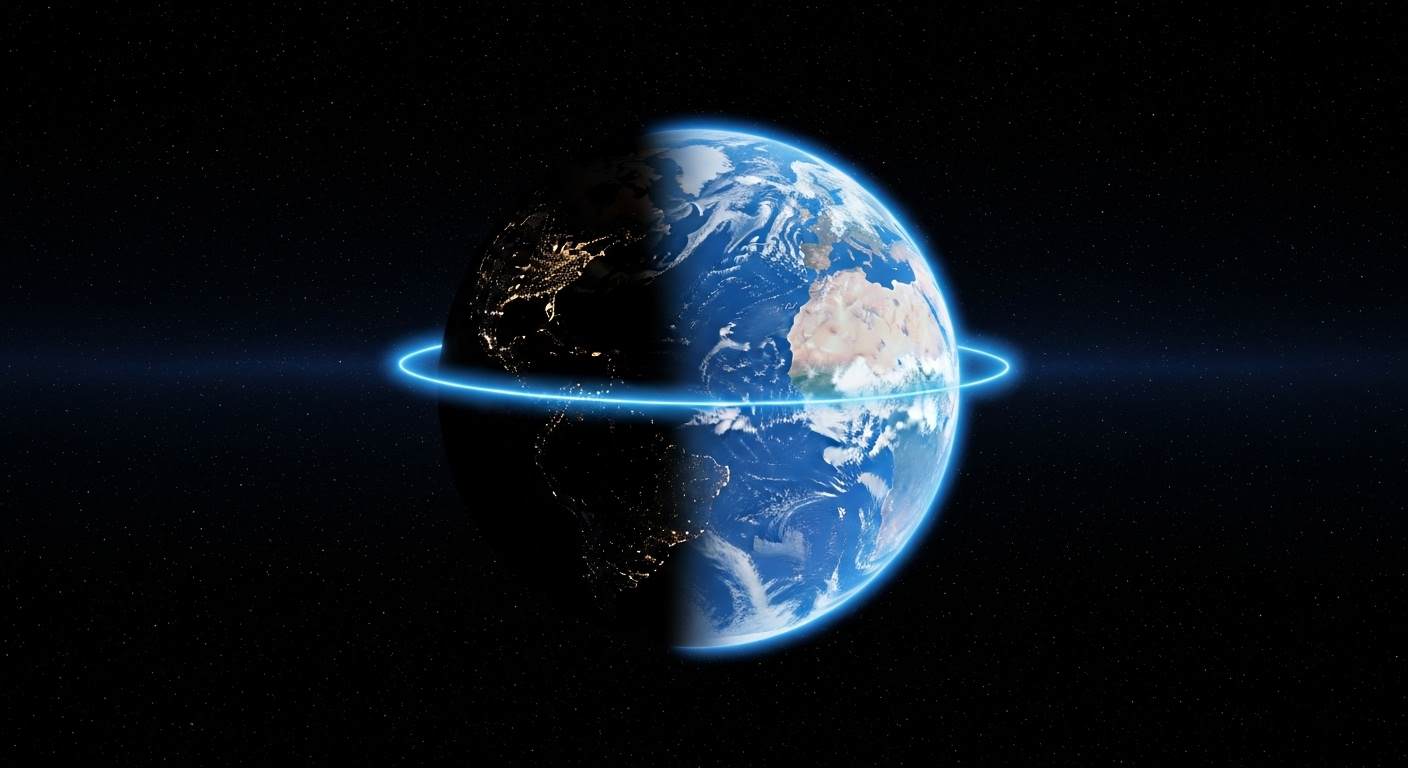
Around 50–70% of Earth’s oxygen comes from ocean phytoplankton. The rest comes mainly from plants.
Without water:
-
Photosynthesis stops
-
Oxygen production drops
-
Carbon dioxide levels may fluctuate
Oxygen wouldn’t vanish overnight, but over time, breathable air would decline.
Earth would slowly become uninhabitable.
Long-Term: Earth Becomes a Desert Planet
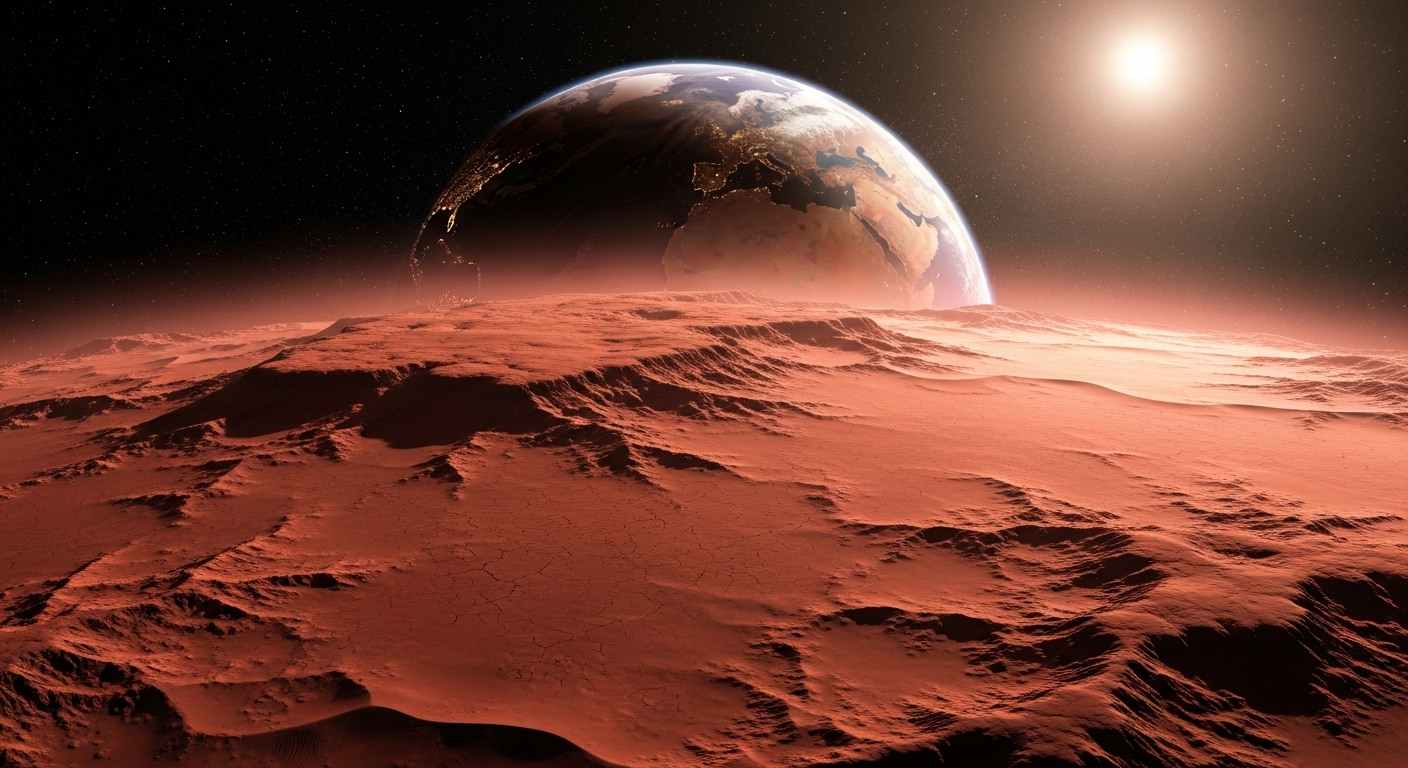
After weeks and months:
-
Most life forms are extinct
-
The surface becomes dry and dusty
-
Temperatures fluctuate violently
-
Atmospheric systems weaken
Eventually, Earth would resemble Mars — dry, barren, silent.
Mountains remain. Continents remain. But life disappears.
The blue planet becomes a brown world.
Could This Ever Really Happen?
In reality, water cannot simply disappear due to physical laws. Water molecules cannot vanish without energy conversion or chemical reaction.
However, planetary science shows us something important:
Mars once had rivers, lakes, and possibly oceans billions of years ago. Over time, it lost its atmosphere and much of its water due to solar wind and weak gravity.
This tells us:
Water stability depends on atmospheric protection and planetary balance.
While total disappearance overnight is impossible, large-scale water loss over geological time is scientifically possible.
Why This Thought Experiment Matters Today
Although this scenario is extreme, water scarcity is already a global issue.
Today:
-
Billions of people face water shortages
-
Glaciers are melting
-
Aquifers are being depleted
-
Rivers are drying in some regions
Climate change affects rainfall patterns and freshwater availability.
Understanding what would happen if water disappeared helps us realize how fragile Earth’s life systems truly are.
Water is not just a resource.
It is the foundation of every living system.
Final Thoughts: The True Value of Water
If water disappeared from Earth:
-
Civilization would collapse within days
-
Most life would vanish within weeks
-
Earth would become a lifeless desert planet
Water connects everything:
-
Climate
-
Agriculture
-
Biology
-
Oxygen production
-
Human survival
Every glass of water represents billions of years of planetary balance.
The next time you turn on a tap and water flows effortlessly, remember:
That simple stream is the reason Earth is alive.
Frequently Asked Questions
1. Could water actually disappear from Earth?
No. Water cannot simply vanish due to conservation laws of physics. However, planets can gradually lose water over billions of years.
2. How long can humans survive without water?
Most humans can survive around 3 days without water, depending on conditions.
3. Would oxygen disappear if water vanished?
Over time, yes. Oxygen production would decline because plants and plankton require water for photosynthesis.
4. Would Earth become like Mars?
Eventually, yes. Without water, Earth would resemble a dry, desert-like planet similar to Mars.